


U.S. Bicycle & Tariff Statistics You Need to Know in 2026
U.S. Bicycle & Tariff Statistics You Need to Know in 2026
The U.S. bicycle industry is navigating one of the most complex tariff environments in modern history. As a founder who has imported bikes and components for over 15 years, I compiled this reference page to give journalists, analysts, and industry watchers a single, sourced data hub for the most-cited statistics on U.S. bicycle imports, tariff rates, supply chain shifts, and consumer price impact through 2026.
Key Statistics at a Glance
The headline numbers on U.S. bicycle tariffs and import trends as of 2026.
- The U.S. imported 8.54 million bicycles in 2025, a 21% decline from 2024 and the lowest total in at least a decade. (Source: U.S. Census Bureau, via Bicycle Retailer and Industry News, 2026)
- Adult bicycles from China face a cumulative tariff of approximately 56% in 2026, combining Section 301, IEEPA, and base duties. (Source: PeopleForBikes, 2026)
- The overall U.S. average effective tariff rate reached 16.8% in late 2025, the highest level since 1935. (Source: Yale Budget Lab, November 2025)
- U.S. consumers and businesses absorb approximately 90% of tariff costs, according to Federal Reserve of New York analysis. (Source: Federal Reserve Bank of New York, 2026)
- The average U.S. household faces an estimated $1,700 annual loss in purchasing power due to 2025 tariffs. (Source: Yale Budget Lab, November 2025)
- China's share of U.S. adult bicycle imports fell from 80% in 2019 to 38% in 2025, as brands shifted sourcing to Cambodia, Vietnam, and Malaysia. (Source: U.S. Census Bureau, via Bicycle Retailer and Industry News, 2026)
- 62% of U.S. small business owners reported supply chain disruptions affecting their business as of March 2026. (Source: NFIB Small Business Economic Trends, March 2026)
- The U.S. bicycle industry filed more than 1,300 comments opposing the proposed Section 232 steel and aluminum tariff extension, more than any other single industry. (Source: PeopleForBikes, 2026)
Current U.S. Tariff Rates on Bicycles (2026)
Tariff rates vary significantly by product type and country of origin. The figures below combine all applicable duties: base duty, Section 301 tariffs, and IEEPA tariffs where applicable.
| Country of Origin | Adult Bicycles (approx. total) | E-Bikes (approx. total) | Bike Parts |
|---|---|---|---|
| China | 56% | 45% | 25-50% |
| Taiwan | ~31% | ~20% | Varies |
| Vietnam | ~30.5% | ~20% | Varies |
| Cambodia | ~19% | ~19% | Varies |
| Malaysia / Indonesia | ~19-25% | ~19-25% | Varies |
Note: Rates are approximate and subject to change. Chinese bicycles previously faced a peak total duty of 66% (adult) and 55% (e-bike); rates were reduced following a PeopleForBikes-led advocacy campaign that defeated a proposed Section 232 steel/aluminum tariff extension in early 2026. (Source: PeopleForBikes, 2026)
- In 2024, the U.S. average effective tariff rate was 2.5%. By late 2025, it had risen to 16.8%, a 6.7x increase in roughly 12 months. (Source: Yale Budget Lab, November 2025)
- E-bike lithium batteries became subject to a 25% tariff in 2026, up from the prior rate of 7.5%, adding cost pressure to the fastest-growing segment of the market. (Source: Bicycle Retailer and Industry News, 2025)
- Bike parts from most countries remain subject to tariffs of 25-50% with no exclusions, even after the Section 232 steel/aluminum decision that spared complete bicycles and e-bikes. (Source: PeopleForBikes, 2026)
- The U.S. Trade Representative launched new Section 301 investigations targeting industrial overcapacity and subsidies across China, the EU, Japan, Taiwan, Cambodia, Vietnam, Malaysia, India, Indonesia, South Korea, and Mexico, signaling further tariff risk across nearly every current bicycle sourcing country. (Source: Crowell & Moring LLP, via U.S. Trade Representative, 2025)
- All 2025 U.S. tariffs combined are projected to generate approximately $2.7 trillion in federal revenue over the 2026-2035 period, before accounting for slower economic growth, which reduces the net dynamic figure to approximately $2.3 trillion. (Source: Yale Budget Lab, November 2025)
U.S. Average Effective Tariff Rate, 2024 vs. 2025 Peak vs. November 2025
Source: Yale Budget Lab, November 2025
Import Volume & Sourcing Shifts
The combination of tariffs and post-pandemic inventory correction has dramatically reshaped where U.S. bike retailers source their products and how many units they bring in.
- U.S. bike imports were down 24% year-to-date through the end of 2025, before finishing the full year at a 21% annual decline. (Source: U.S. Census Bureau, via Bicycle Retailer and Industry News, December 2025)
- China's share of U.S. adult bicycle imports fell from 80% in 2019 to 38% in 2025 as brands aggressively diversified sourcing. (Source: U.S. Census Bureau, via Bicycle Retailer and Industry News, 2026)
- In the first half of 2025, Chinese bike imports plummeted 42% year-to-date as the industry shifted volume to Cambodia, Vietnam, and other Southeast Asian manufacturers. (Source: U.S. Census Bureau, via Bicycle Retailer and Industry News, August 2025)
- Cambodia became the largest single supplier nation to the U.S. bicycle market by import value in the first half of 2025, with import value rising 77% year-over-year to $132 million. (Source: U.S. Census Bureau, via Bicycle Retailer and Industry News, August 2025)
- U.S. bike imports from Taiwan declined 20% in 2025, while imports from Malaysia, Indonesia, and India each increased as sourcing continued to diversify. (Source: U.S. Census Bureau, via Bicycle Retailer and Industry News, 2026)
- In 2022, the U.S. imported bicycles valued at approximately $1.3 billion while exporting only $143 million worth, reflecting the highly import-dependent nature of the domestic market. (Source: U.S. Census Bureau, via Statista, 2023)
- Imports account for approximately 97% of U.S. bicycle market supply, with domestic manufacturing covering only a small fraction of demand. (Source: Coalition for a Prosperous America, 2022)
China's Share of U.S. Bicycle Imports: 2019 vs. 2025
Source: U.S. Census Bureau, reported by Bicycle Retailer and Industry News, 2026
Consumer & Household Price Impact
Tariffs do not stay at the port of entry. Research from Goldman Sachs, the Federal Reserve, and the Yale Budget Lab traces how those costs move through supply chains to reach consumers.
- The 2025 tariffs represent an estimated $1,700 annual loss in purchasing power for the average U.S. household. Low-income households (bottom income decile) face a loss of approximately $900, representing a disproportionately larger share of their post-tax income (2.4% vs. 0.8% for the top decile). (Source: Yale Budget Lab, November 2025)
- Overall U.S. consumer prices rose an estimated 1.2% in the short run as a direct result of 2025 tariffs, with apparel and leather goods seeing the sharpest price increases of 20%+ in the short run. (Source: Yale Budget Lab, November 2025)
- Goldman Sachs estimated that U.S. consumers will absorb 55% of tariff costs by end of 2025, rising to approximately 70% by end of 2026 as businesses complete the pass-through process. (Source: Goldman Sachs, reported by Fortune, August 2025)
- The Federal Reserve Bank of New York confirmed that 90% of tariff costs are being passed to U.S. companies and consumers, with foreign exporters absorbing less than 10%. (Source: Federal Reserve Bank of New York Liberty Street Economics, 2026)
- Between March and October 2025, prices of imported goods rose approximately 6.2% relative to pre-tariff trend levels, while domestic goods rose 3.6% over the same period. (Source: Yale Budget Lab, 2025)
- Goldman Sachs found that tariffs have pushed core PCE (personal consumption expenditure) inflation up by approximately 0.44 percentage points as of mid-2025, with an additional 0.6 percentage points expected as pass-through continues. (Source: Goldman Sachs, reported by NBC News, 2025)
- For bicycle consumers specifically, tariff-driven cost increases have resulted in price hikes of 10-25% or more on Chinese-origin bikes and components, based on industry estimates of 10-15% average increases before retailers absorb any margin compression. (Source: JoltBike / Hovsco industry analysis, 2025)
- In a Federal Reserve Bank of Boston survey, more than 45% of small and medium-sized importing businesses affected by tariffs expected their costs to be elevated for longer than one year as of August 2025. (Source: Federal Reserve Bank of Boston, 2025)
Small Business & Supply Chain Impact
Independent retailers, importers, and manufacturers face disproportionate exposure to tariff costs with less capacity to absorb or hedge than large corporations.
- 62% of U.S. small business owners reported supply chain disruptions affecting their business to some extent as of March 2026, according to NFIB's monthly survey. (Source: NFIB Small Business Economic Trends, March 2026)
- Between 59% and 64% of small business owners reported supply chain disruption impact consistently throughout late 2025 and early 2026, suggesting the disruption has become structural rather than transitory. (Source: NFIB Small Business Economic Trends, October 2025 through March 2026)
- Small businesses that believe tariffs will persist for a year or longer anticipate pass-through rates as much as three times higher than those expecting short-term tariffs, underscoring how expectations shape pricing behavior. (Source: Federal Reserve Bank of Boston, 2025)
- The U.S. bicycle industry mobilized more than 1,300 public comments in opposition to the proposed Section 232 steel and aluminum tariff extension in 2025-2026, which would have levied a 50% tariff on the steel and aluminum content of all bicycles, e-bikes, and frames. (Source: PeopleForBikes, 2026)
- Escalating trade pressures are disrupting every link in the bicycle supply chain, driving up costs, complicating sourcing, squeezing margins, and shaking consumer confidence, according to PeopleForBikes' industry analysis. (Source: PeopleForBikes, 2026)
- A Federal Reserve study found tariff effects have been particularly concentrated in Chinese-origin goods, with prices rising 8.5% year-over-year by December 2025, compared to much smaller increases for goods sourced from other countries. (Source: Federal Reserve FEDS Notes, March 2026)
U.S. Bicycle Market Size & Revenue
Despite tariff headwinds, the underlying U.S. bicycle market remains substantial, driven by recreational cycling, urban mobility demand, and e-bike adoption.
- National spending on bicycles and accessories grew 620% from March 2020 to March 2023, driven by the pandemic cycling boom, before normalizing and declining as tariffs and inventory gluts weighed on the market. (Source: U.S. Bureau of Transportation Statistics, 2023)
- In 2024, e-bikes accounted for approximately 30% of total U.S. bicycle revenue, with around 920,000 e-bike units sold alongside traditional bicycles. (Source: Grand View Research / Statista, 2025)
- The U.S. bicycle market generated approximately $13.6 billion in revenue by some estimates for 2025, depending on whether wholesale or retail values are used and how accessories are counted. (Source: Grand View Research, 2025)
- Imports account for approximately 97% of U.S. bicycle market supply. Domestic bicycle manufacturing, which collapsed over prior decades, covers only a very small fraction of national demand. (Source: Coalition for a Prosperous America, 2022)
E-Bike Segment: Tariffs, Growth & Pricing
E-bikes have emerged as the fastest-growing bicycle category and the most tariff-sensitive, given that roughly 90% of U.S. e-bikes are either assembled in China or use significant Chinese components.
- The U.S. e-bike market was valued at approximately $2 billion in 2025, growing at a compound annual growth rate of 7.8-9.4% through 2034, driven by urban commuting, fuel costs, and sustainability trends. (Source: GM Insights / IMARC Group, 2025)
- E-bikes imported from China faced a cumulative tariff of approximately 45% in 2026, reduced from a prior total of 55% following successful industry advocacy that blocked the Section 232 extension. (Source: PeopleForBikes, 2026)
- E-bike lithium batteries became subject to a 25% tariff in 2026, up from 7.5%, directly impacting the cost of the most expensive single component in an electric bike. (Source: Bicycle Retailer and Industry News, 2025)
- At peak 2025 tariff levels, Chinese e-bikes faced a cumulative duty of 84%, prompting significant price increases of 10-15% or more at retail and accelerating brand efforts to diversify manufacturing out of China. (Source: Electrek, April 2025)
- The global e-bike market is projected to reach $87.15 billion by 2032, underscoring the scale of the industry the U.S. tariff environment is disrupting. (Source: MarketsandMarkets, 2025)
- In April 2026, after sustained advocacy from U.S. e-bike brands and importers, key Section 232 steel/aluminum tariff proposals were rejected for bicycles and e-bikes, providing partial relief, though component tariffs and existing Section 301 levies remain in place. (Source: Electrek, April 2026)
Frequently Asked Questions
How much are current U.S. tariffs on bicycles from China?
As of 2026, adult bicycles imported from China face a cumulative tariff of approximately 56% (down from a prior peak of 66%), while e-bikes face tariffs of approximately 45% (reduced from 55%). These figures combine Section 301 tariffs, IEEPA tariffs, and base duty rates. Rates for other countries are significantly lower: Taiwan ~31%, Vietnam ~30.5%, Cambodia ~19%. (Source: PeopleForBikes, 2026)
How have tariffs changed bicycle prices for consumers?
Goldman Sachs research found that U.S. consumers and businesses absorb approximately 90% of tariff costs. The Yale Budget Lab estimates 2025 tariffs have raised overall consumer prices by 1.2% and cost the average U.S. household approximately $1,700 per year. For bicycles specifically, tariff-driven cost increases have led to price hikes of 10-25% or more on Chinese-origin bikes.
Where are U.S. bikes imported from now that China tariffs are so high?
The sourcing map has shifted dramatically. In 2019, China supplied 80% of adult bikes imported to the U.S. By 2025, China's share had dropped to 38%, with Cambodia, Vietnam, Malaysia, Indonesia, and Taiwan absorbing most of the volume shift. Cambodia surged to become the largest supplier by value in the first half of 2025 with a 77% year-over-year increase in import value to $132 million. (Source: U.S. Census Bureau / Bicycle Retailer and Industry News, 2026)
How many bicycles does the U.S. import each year?
The U.S. imported 8.54 million bikes in 2025, a 21% decline from 2024 and the lowest total in at least a decade, according to U.S. Census Bureau trade data. The drop reflects both tariff-driven cost increases and excess inventory carried over from the COVID-era cycling boom. (Source: U.S. Census Bureau, 2026)
What percentage of U.S. small businesses say tariffs have disrupted their supply chains?
According to NFIB Small Business Economic Trends surveys, between 59% and 64% of U.S. small business owners reported supply chain disruptions affecting their business throughout late 2025 and early 2026. In March 2026, the figure stood at 62%. (Source: NFIB, March 2026)
Is the U.S. bicycle market growing despite tariffs?
The U.S. bicycle market is estimated at approximately $9.2 billion in 2025 revenue, driven by e-bike adoption, recreational cycling, and urban mobility. However, import volumes contracted sharply due to tariff-driven cost increases and inventory normalization. The e-bike segment remains a growth driver at approximately $2 billion in 2025, growing at 7-10% per year. (Source: Grand View Research / GM Insights, 2025)
Sources
Every statistic on this page is sourced from one of the following organizations or publications. No statistics were sourced from AI-generated content or unverified aggregator sites.
- U.S. Census Bureau (USA Trade Online)
- Yale Budget Lab
- Goldman Sachs (via Fortune, NBC News)
- Federal Reserve Bank of New York (Liberty Street Economics)
- Federal Reserve Bank of Boston
- Federal Reserve (FEDS Notes)
- PeopleForBikes
- Bicycle Retailer and Industry News
- NFIB Small Business Economic Trends
- U.S. Bureau of Transportation Statistics
- Grand View Research
- GM Insights
- IMARC Group
- MarketsandMarkets
- Electrek
- Statista
- Coalition for a Prosperous America
- Crowell & Moring LLP (U.S. Trade Representative analysis)
- JoltBike / Hovsco (industry practitioner analysis)



Shop $599 and Under
View All



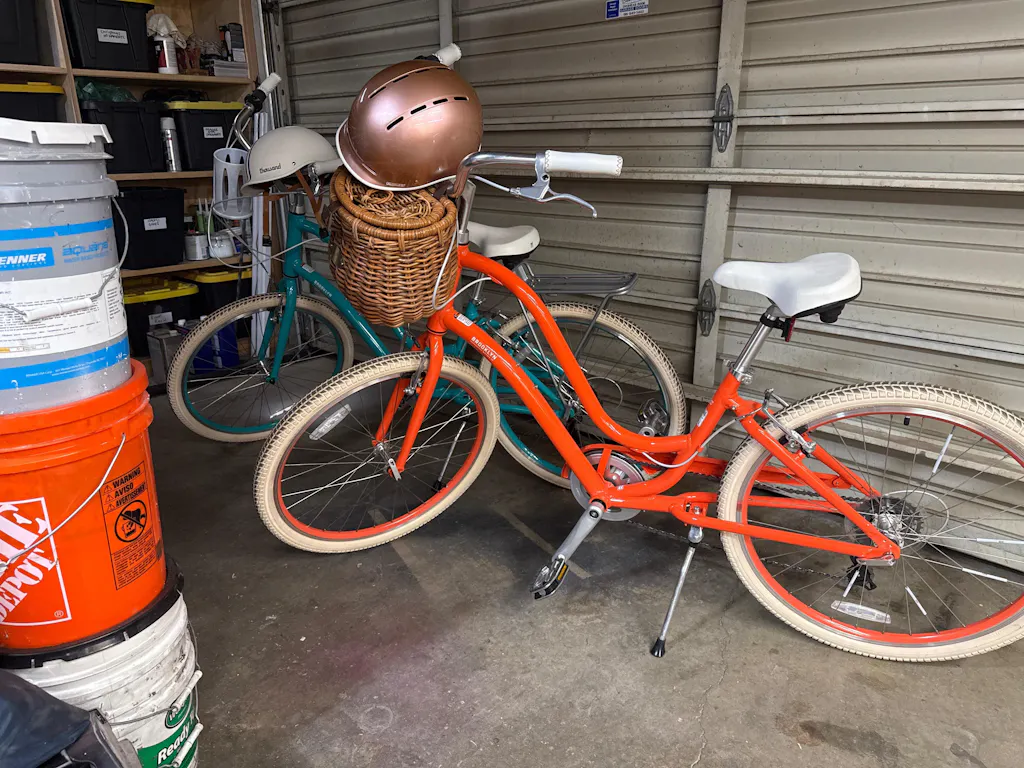
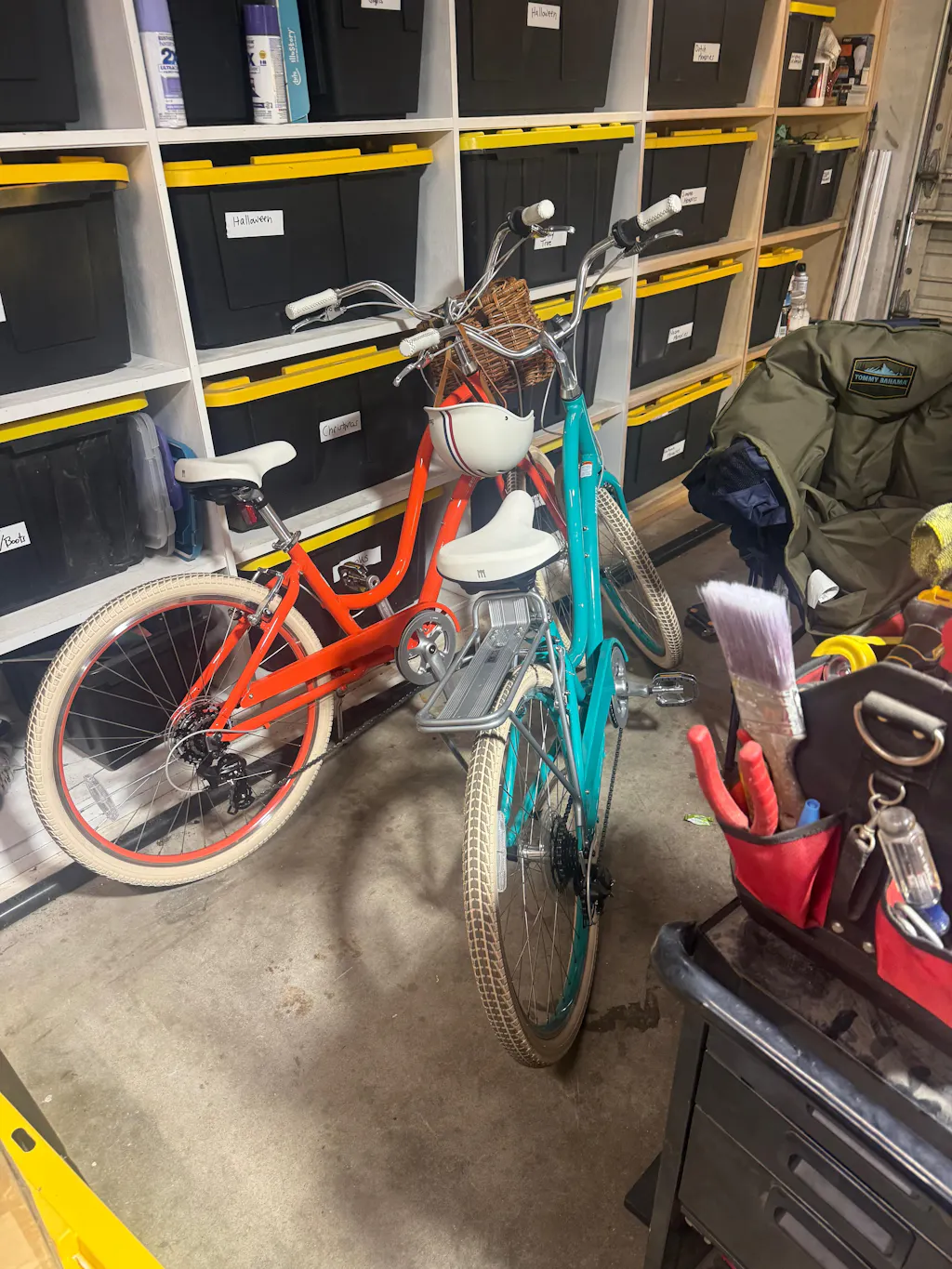
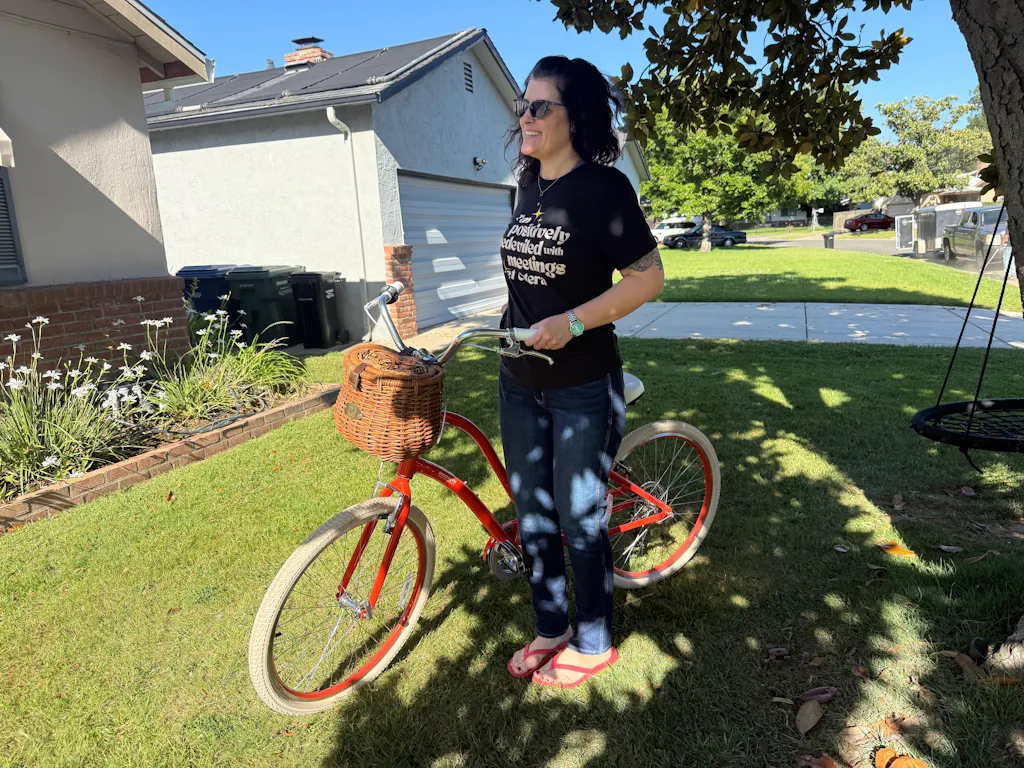
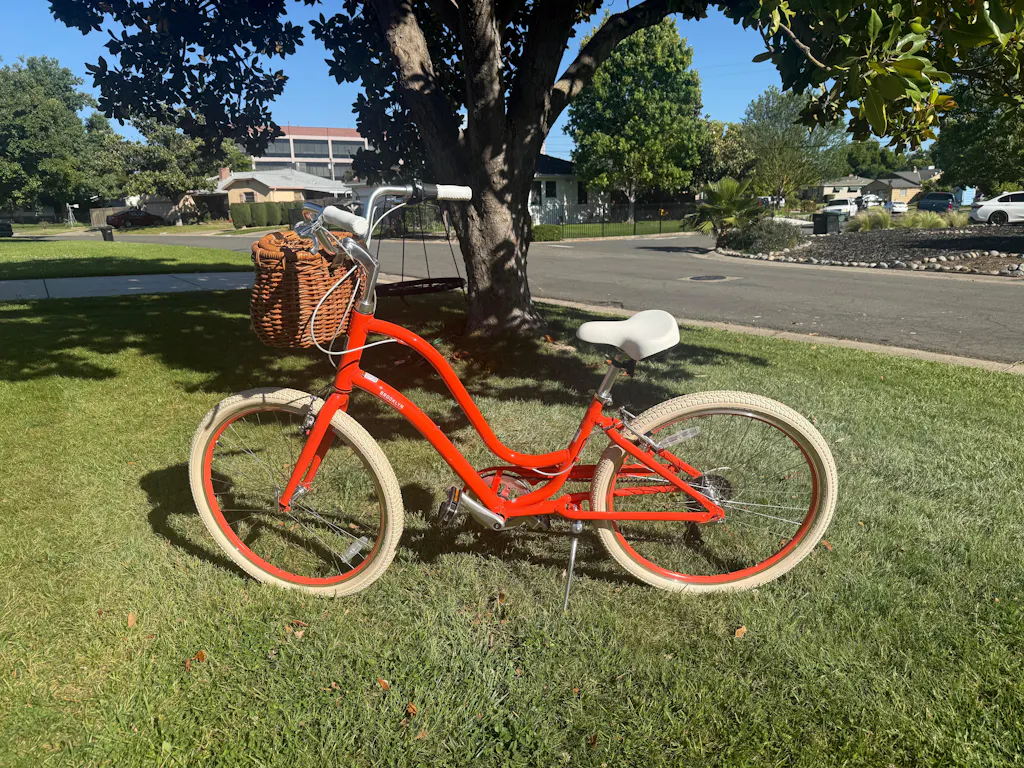
We build bikes for vivid lives—for taking adventures, reconnecting with old friends, discovering new neighborhoods and exploring hidden gems. Inspired by the streets of Brooklyn, our bikes are built for style, comfort, and durability. Made with top quality parts, crafted with care, and sold at an affordable price, your bike is yours for life. We scrutinize every component for maximum sustainability and performance, and every millimeter of the frame for ultimate comfort and style. We take pride in our process, in our products, and in the people who sell them.

