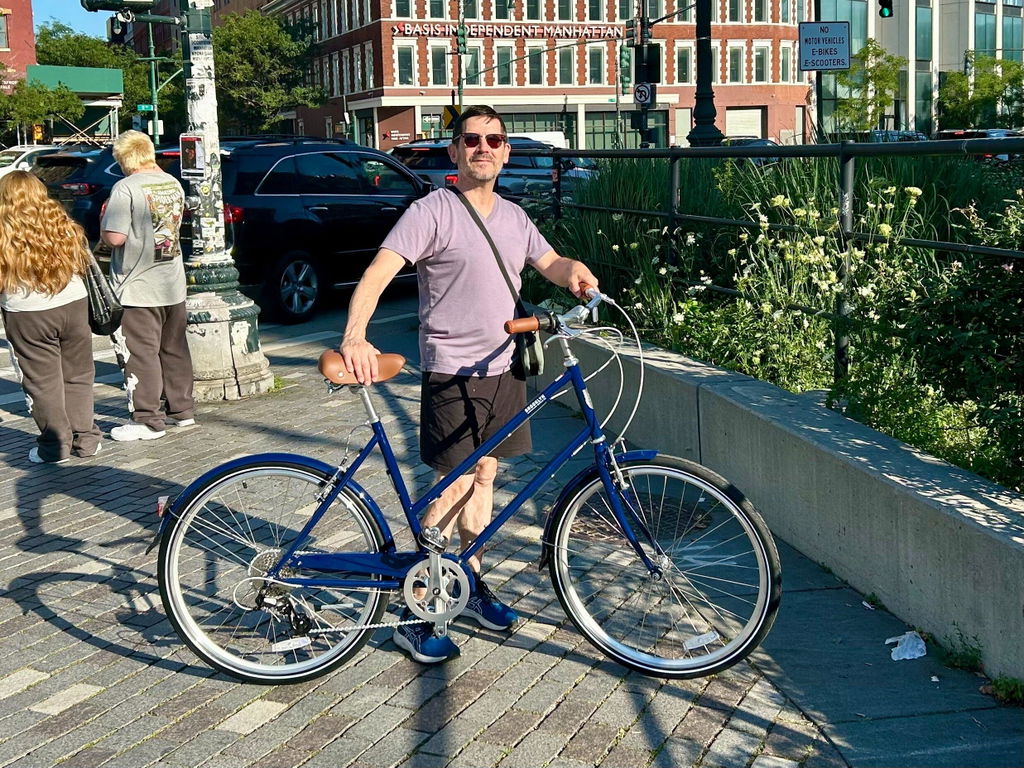
Best Commuter Bike for City Riding
A Real-World Guide to Choosing Your Perfect Daily Ride

Free guide
From the brand with 1,400+ five-star reviews. No spam, unsubscribe anytime.
What Exactly Is a "Commuter Bike"?
It's not about fancy specs or labels – it's the bike you'll ride every day.
A true commuter bike lets you roll to work or around town in your real clothes, carrying whatever you need, reliably and comfortably. Forget spandex and ultra-light carbon frames; think practicality and consistency. A solid city commuter comes equipped to handle daily wear, whether you're biking in a blazer or a rain jacket.
It should accommodate a backpack or groceries, fend off puddle splashes, and basically make itself invisible – no constant tweaks or fragile parts. In short: the best commuter bike is one that fits your life, not the other way around.


The 6-Question Framework for Choosing Your City Bike
When picking a commuter bike, ditch the marketing hype and start with these six rider-first questions. This framework keeps you focused on what actually matters for city riding, so you won't end up with more (or less) bike than you need.
How Will You Use It?
Be clear about your main use case. Is this purely for weekday commutes? Quick errands and weekend cruising? A daily work commuter typically calls for a versatile, durable ride with medium-width tires, provision for racks/fenders, and comfortable posture. Match the bike to how you'll actually ride.
What Terrain Will You Cover?
Flat, rolling, or hilly? Focus on gear range – how low and high those gears go. For flat cities or <3 mile commutes, a single-speed or 3-speed works great. But if you'll face steep hills, prioritize wider gearing range (7+ speeds) so you're not grinding uphill or spinning out on descents.
Which Frame Style Fits You Best?
City bikes come in two styles: diamond frame (lighter, stiffer) and step-through frame (easy mounting/dismounting). If you'll bike in work attire or carry heavy cargo, a step-through is a lifesaver for stability. Choose the frame that will make you want to ride more.
Are You Sized Right?
A bike that's too small or too big makes every ride awkward. Your inseam (leg length) is the secret sauce for perfect fit. Aim for a frame where you get full leg extension when pedaling and can comfortably put a foot down at stops.
What Accessories Do You Need?
One big perk of a true commuter bike: it plays nice with accessories. Prioritize fender compatibility for rain/shine riding. Look for rear rack or mounting points. Lights are a must for safety. Make a checklist of must-haves and ensure the bike accepts them.
What's Your Assembly & Maintenance Plan?
Have a bike shop in mind for assembly and maintenance. Professional assembly ensures brakes are tuned, wheels are true, and gears are adjusted correctly. Plan on regular tune-ups: a quick check after the first month and annual maintenance.Decision Matrix: Find Your Commuter Bike in 30 Seconds

Not into deep reading? Here's a quick-reference table to zero in on a city bike type based on your commute distance, terrain, and cargo needs.
| Commute Distance | Terrain | Cargo Needs | Recommended Bike Type |
|---|---|---|---|
| < 3 miles | Flat | None | Single-Speed City Bike – Simple, low maintenance. Perfect for flat neighborhoods and zero fuss. |
| < 3 miles | Flat | Light (backpack, small bag) | 3-Speed Urban Cruiser – Upright bike with internal 3-speed hub and basket. Easy-going and stylish for short errands. |
| < 3 miles | Hills | Any | Geared City Bike (7+ speeds) – Even for short hops, hills mean you'll want wide-range gearing. Look at hybrids or city bikes with extra gears. |
| 3–8 miles | Flat/Rolling | None | Versatile Hybrid – Light hybrid or flat-bar road bike. 3-7 speed for flat routes, 7–8 for rolling terrain. |
| 3–8 miles | Flat/Rolling | Moderate | Commuter w/ Racks – 8-speed city bike (step-through or diamond). Upright posture, capable gears, ready for panniers. |
| 3–8 miles | Hills | Any | Multi-Speed Hybrid – You'll want 8–14 speeds or quality internal hub. Lightweight hybrid with wide gear range for inclines. |
| 8+ miles | Flat/Rolling | None | Flat-Bar Road Bike – For longer commutes on flat ground, a fitness-oriented bike works well. Fast but handles fenders and light racks. |
| 8+ miles | Flat/Rolling | Heavy | Sturdy City Bike – Durable steel frame with 8-speed internal hub or derailleur. Designed to handle weight. Stable handling when hauling kids or cargo. |
| 8+ miles | Hilly | Any | Performance Commuter or E-Bike – Long + hilly is tough. 18–24 speed commuter or pedal-assist e-commuter makes it enjoyable. Quality brakes and comfortable geometry. |
 Ignore the Internet's Favorite Distractions
When researching bikes online, you'll encounter plenty of well-intentioned but over-hyped advice. Time to bust a few myths:
 Next Steps: Ready to Ride?
You've done the thinking – now it's time for action. Here's a simple game plan to move forward:
 FAQs: Quick Answers for New Commuters
Below we tackle some common follow-up questions new city riders often have. If you're wondering about gears, maintenance, or how to keep your bike safe, read on:
For most city riders, 3 to 8 well-chosen gears are plenty. It's more important to have the right range than a high number. If your route is flat, a 3-speed (or even single-speed) covers it. For hilly areas, a 7-speed or 8-speed with wide range makes climbs easier. Don't be dazzled by 21+ speeds – many will be overlapping. Focus on whether the bike's lowest gear is low enough for your hills and the top gear comfortable for your cruising speed. Quality over quantity here.
Professional assembly is highly recommended. While it's possible to do it yourself if you're experienced, a shop mechanic will ensure everything is tuned and safe. Things like aligning the brakes, truing wheels, or adjusting derailleurs can be tricky without proper tools. Plus, a pro build means your bike gets a full safety check. It's worth it for peace of mind.
If you'll ever face rain, puddles, or even a wet post-storm road, yes, fenders are your best friend. They keep dirty water off your clothes and make arriving presentable so much easier. Many commuter bikes either come with fenders or have mounting points for them. If yours doesn't and you ride in a rainy climate, invest in a set of bolt-on or easy-clip fenders. Overall, highly recommended for a city bike.
Flats are inevitable, but you can greatly reduce their frequency. Start with tires that have a puncture-resistant layer (many urban tires advertise Kevlar or similar protection). Keep your tires properly inflated – underinflated tires pinch flat more easily. You can also consider tire liners or self-sealing inner tubes for extra defense. Avoid glass, potholes, and debris when you can. Finally, do a quick check for embedded thorns or glass bits regularly. Carry a spare tube or patch kit – but these steps mean you'll rarely need it.
The basic formula: use a quality U-lock + cable, and lock the frame and wheels to something secure. Don't rely on cheap cable locks alone – thieves can cut those in seconds. A hardened U-lock around the frame and a rack is the gold standard. Add a cable or second lock for the wheels and saddle if quick-release. Whenever possible, park in visible, well-lit areas. At home, keep your bike indoors or in a locked area if you can. Register your bike's serial number and consider bike insurance if you have a pricey model. With a bit of vigilance, you can make your bike a very tough target.
You'll want a frame size that matches your height and inseam. Most city bikes come in two sizes covering a wide range of riders. Measure your inseam (floor to crotch) and use that to gauge standover height. When you straddle the bike, you should have a bit of clearance. With the seat adjusted, you want a slight bend in the knee at the bottom of the pedal stroke. If you're between sizes, longer arms/torso might go up a size, shorter might go down. If you can test ride or get fitted at a shop, do it. A properly sized bike feels stable and comfy – you'll know when it's right.
For a daily commuter, a quick tune-up about once a year (or every 1000-2000 miles) is a good idea. This includes checking brake pads, lubricating the chain, ensuring bolts are tight, and adjusting gears and brakes. Your first service should come sooner – about 4-6 weeks after you start riding. Between official services, pump the tires every week or two, lube the chain monthly (or if it squeaks), and inspect brake function regularly. Commuting in wet or winter conditions? You'll need to service more often. A well-cared-for bike lasts longer, stays safer, and remains fun to ride daily.

Free guide
From the brand with 1,400+ five-star reviews. No spam, unsubscribe anytime.
Shop Commuter Bikes for Everyday Riding | Brooklyn Bicycle Co.
View All



We build bikes for vivid lives—for taking adventures, reconnecting with old friends, discovering new neighborhoods and exploring hidden gems. Inspired by the streets of Brooklyn, our bikes are built for style, comfort, and durability. Made with top quality parts, crafted with care, and sold at an affordable price, your bike is yours for life. We scrutinize every component for maximum sustainability and performance, and every millimeter of the frame for ultimate comfort and style. We take pride in our process, in our products, and in the people who sell them.