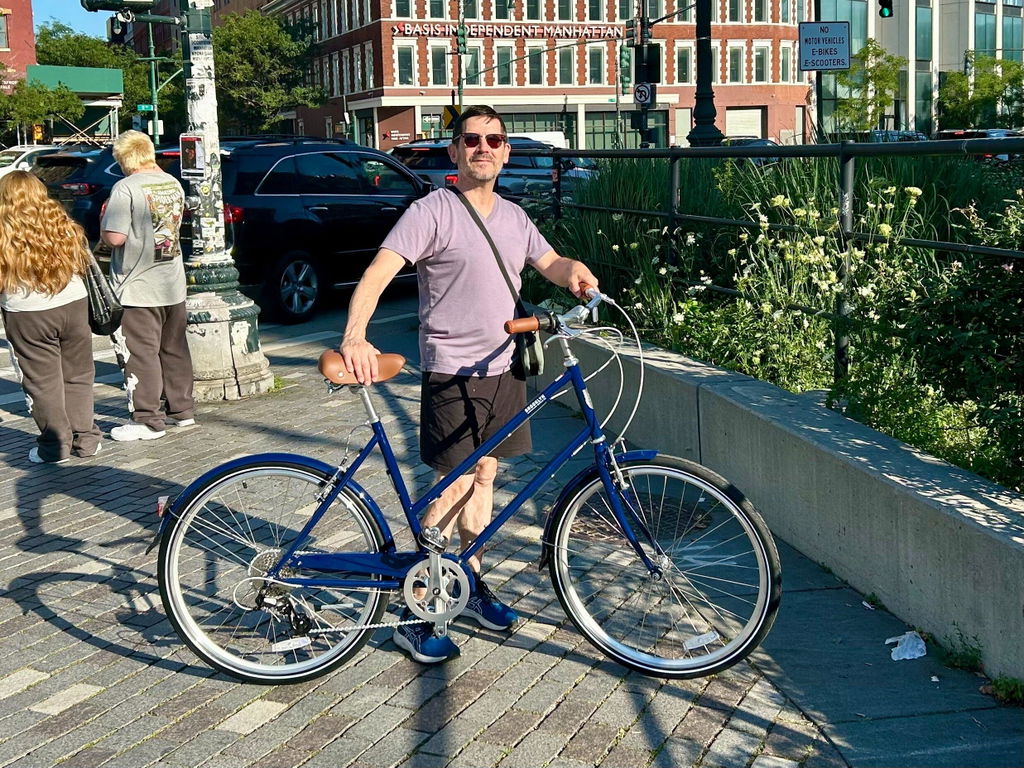
Commuter Bike vs Hybrid Bike: Which Is Right for City Riding?
A commuter bike is built for the city out of the box. A hybrid bike is a versatile road-and-light-trail bike that some people adapt for commuting. If you ride paved streets to work every day, a commuter bike will be more comfortable, lower maintenance, and faster to own. If you split time between pavement and park paths or gravel on weekends, a hybrid makes sense. The six questions below will tell you which one fits your actual ride.
The short version
| Commuter Bike | Hybrid Bike | |
|---|---|---|
| Built for | Daily city riding, pavement | Mixed pavement + light trails |
| Riding position | Upright, head-up for traffic | Upright or slightly forward |
| Tire width | 32 to 42 mm, puncture-resistant | 35 to 45 mm, mixed-surface tread |
| Typical gearing | 1 to 9 speeds, tuned for city | 9 to 21 speeds, wider range |
| Fenders and rack mounts | Standard or easy to add | Varies, often aftermarket |
| Weight | 22 to 30 lb | 24 to 30 lb |
| Maintenance | Low (especially internal hubs) | Moderate (derailleurs, more moving parts) |
| Typical price band | $500 to $1,000 for a bike that lasts | $500 to $1,200 |
| Best for | Short-to-medium city commutes, errands | Weekend versatility, occasional commuting |
Both categories are good bikes. The category label matters less than whether the bike fits the commute. Keep reading for the framework that sorts it out in under a minute.
What actually makes a bike a "commuter"?
"Commuter bike" is not a frame type. It is a build philosophy. A bike earns the commuter label when it is designed, out of the box, for the realities of getting to work on pavement: upright geometry so you can see traffic, tires wide enough to survive potholes and cracks, gearing matched to city speeds, mounts for fenders and a rack, and components that do not require weekly attention.
A hybrid bike is a different category. Hybrids were originally built as road-mountain bike crossbreeds for riders who wanted one bike for the weekday ride to the coffee shop and the weekend gravel path. A hybrid can become a commuter bike if you add fenders, a rack, and city-appropriate tires. It is never quite as integrated as a purpose-built commuter, and it often costs more to adapt than to buy the right bike in the first place.
The difference matters because the category you pick changes what breaks, what you spend on accessories, and how much you enjoy the ride in February.
Is a hybrid bike good for commuting?
Yes, with caveats. A hybrid is a perfectly reasonable commuter if your ride is under 5 miles, you do not carry much, and you also want to ride crushed-gravel park paths on the weekend. You will want to add fenders before your first rainy Monday and a rack if you carry anything heavier than a laptop.
A hybrid becomes less ideal when the commute lengthens, the weather gets harder, or the carry gets heavier. Hybrid tires have more tread than you need for pavement, which slows you down. Derailleur drivetrains exposed to road salt and rain need more frequent service than internal hubs. Rack and fender compatibility is uneven across hybrid models.
The honest rule: if the bike will be used for commuting at least four days a week, a purpose-built commuter is the better buy. If it will see half its days on light trails or gravel, a hybrid earns its keep.
How many speeds do you actually need?
Gear count sounds like a spec-sheet decision and it is actually a route decision. Match the drivetrain to the terrain, not the other way around.
Flat city, short commute (under 4 miles): 1 to 3 speeds is plenty. A single-speed like the Wythe is clean, light, and nearly maintenance-free. A 3-speed internal hub like the Franklin 3 handles headwinds and a grocery run without adding complexity.
Mixed terrain, moderate commute (3 to 8 miles): 7 to 8 speeds. The Bedford 8 and Franklin 8 cover almost every rolling urban route in the United States. Cities like Chicago, Denver's flats, most of Brooklyn, and central DC fit here.
Hilly commute or longer ride (8-plus miles with real climbs): 8 or 9 speeds with a wide range. The Roebling and Lorimer give you the low gear for climbs and the top-end for the flats on the way home. Seattle, San Francisco, Pittsburgh, and parts of Boston live here.
The League of American Bicyclists reports that average US bike commute distances cluster between 2 and 7 miles, which is why most city riders are over-geared on the bike they already own. More gears are not better. The right range is better.
Hybrid speed vs commuter speed: does it actually matter?
For a commute under 10 miles, speed is rarely the deciding factor. Both a hybrid and a commuter sit you upright, which costs you roughly 15 to 20 percent in efficiency compared to a road bike at the same effort. Between a hybrid and a commuter, the delta is small. Tire width, tire pressure, and drivetrain cleanliness matter more than the category label.
If you are picking between a commuter and a road bike, the road bike wins on raw speed. If you are picking between a commuter and a hybrid, you are choosing between two bikes that will deliver you within a minute of each other on a typical ride.
Why upright geometry wins in traffic
Upright geometry is the single most underrated feature of a good city bike. A head-up riding position lets you scan traffic, catch a driver's eyes at a four-way stop, and do a rear-shoulder check before a car door opens. It also keeps your neck and lower back out of the bent posture a road bike demands.
Both commuter and hybrid bikes deliver upright geometry. Commuter bikes tend to sit the rider a touch more upright than hybrids, which is part of why they are more comfortable on short daily rides and slightly less aerodynamic on long ones. For city traffic, the tradeoff favors upright every time.
Internal hub or derailleur: what actually changes day to day?
This is the quiet decision that shapes your ownership experience more than the category name on the box.
Internal hub (inside the rear wheel). Fewer exposed parts, near-zero maintenance, shifts while stopped at a red light. Slightly heavier, slightly pricier, narrower gear range. BBC's Franklin 3, Driggs 8i Disc, and Willow 8i Disc are internal-hub builds. Best for wet climates and riders who will not service a bike themselves.
Derailleur (external cogs on the rear wheel). Lighter, wider gear range, cheaper to replace individual parts. Exposed to weather and grit. Needs a chain clean every few weeks in dirty conditions. BBC's Bedford 8, Franklin 8, Roebling, and Lorimer run derailleurs. Best for drier climates, longer rides, or riders who enjoy light mechanical care.
Neither is inherently better. The climate and your maintenance tolerance decide.
Disc brakes, rim brakes, and what rain actually does
In dry conditions, modern rim brakes stop a bike just as well as disc brakes at typical city speeds. In sustained rain or snow, discs hold their stopping power and rims lose some. If you ride year-round in Seattle, Portland, or Boston, disc brakes are worth the modest price bump. If you ride a dry climate or take the subway when it pours, rim brakes are fine. The Driggs 8i Disc and Willow 8i Disc are BBC's disc-brake options for riders who want the wet-weather margin.
Tire width is the other quiet decision
City pavement is not smooth. Cracks, utility plates, brick sections, and rain grates are all waiting for a skinny tire. The sweet spot for urban commuting is 32 to 42 mm with puncture-resistant casing. Narrower and you feel every seam. Wider and you start adding rolling resistance you do not need on pavement. Hybrids often come with 40 to 45 mm tires with tread; commuters tend to ship with slicker tires in the 32 to 38 mm range. Either works. Tread depth matters less than casing quality on pavement.
The short answer: which bike for which commute?
Here is the decision without the hedging. Match your distance and your terrain, and the right category is obvious.
| Flat city | Rolling | Hilly | |
|---|---|---|---|
| Short (under 4 mi) | Commuter, 1 to 3 speeds | Commuter, 7 to 8 speeds | Commuter, 8 to 9 speeds |
| Medium (4 to 8 mi) | Commuter, 7 to 8 speeds | Commuter, 7 to 8 speeds | Commuter, 9 speeds |
| Long (8 mi plus) | Commuter or road | Commuter or road | Commuter, 9 speeds, or road |
Hybrid sits outside this grid because it solves a different problem: you want one bike for commuting and weekends on light trails. If that is your use case, a hybrid wins. If commuting is the job, a purpose-built commuter wins.

Free guide
From the brand with 1,400+ five-star reviews. No spam, unsubscribe anytime.
The 6-Question Commute Fit Framework
Answer these six questions honestly. The answers map to a bike.

- How long is your one-way commute? Under 4 miles, short. 4 to 8, medium. Over 8, long.
- Is your route flat, rolling, or hilly? Flat means you could ride a single-speed. Hilly means you want a granny gear.
- Do you carry anything? Laptop and change of clothes is light. Groceries or kids is heavy. Heavy means a rack and sturdy rear-end geometry.
- What is your weather exposure? Year-round rain or snow pushes you toward disc brakes, fenders, and internal hubs. Dry climate keeps your options open.
- How much bike maintenance do you want to do? "None" points to an internal hub and belt drive if available. "A little every month" opens up derailleur options, which are lighter and wider-range.
- Where will the bike live? Carrying it up apartment stairs every day argues for a lighter frame. Garage or locked bike room means weight matters less.
Take your six answers and match them against the grid above. That is your bike.
Where BBC fits
Brooklyn Bicycle Co. is a commuter-first brand. The full lineup is built on the same design principles: upright geometry, city-appropriate gearing, rack and fender mounts standard, tires tuned for pavement, and components that survive real city use. Within that, the lineup covers every answer to the six questions.
- Wythe. Single-speed diamond frame. Flat cities, short commutes, riders who want the cleanest possible bike.
- Franklin 3. 3-speed step-through with an internal hub. Easy on-off in work clothes, low maintenance.
- Bedford 8. 8-speed diamond frame. The most popular BBC commuter. Fits the widest slice of American commutes.
- Franklin 8. 8-speed step-through. Same capability as the Bedford 8 with easier mounting.
- Roebling and Lorimer. 9-speed diamond frames. Hillier cities and longer commutes.
- Driggs 8i Disc. 8-speed internal hub with disc brakes. Wet climates, low-maintenance riders.
- Willow 8i Disc. Step-through version of the Driggs. Same wet-weather capability with easier mounting.
All BBC bikes land in the $500 to $1,000 price band depending on configuration. That is the honest range for a bike that will serve you daily for five-plus years. Bikes under $400 tend to use components that fail inside two years of daily use, which makes them expensive per mile, not cheap.
How BBC compares to other brands you will see
If you are shopping, a few names will come up. Quick orientation:
- Priority Bicycles. Belt-drive, internal-hub specialists. Excellent low-maintenance builds. Typically a touch more expensive than BBC for comparable specs. Great bikes if belt drive is a priority for you.
- Linus. Strong on style, especially European-inspired city bikes. Comparable price band. Fewer speed options in the lineup.
- State Bicycle Co. Known for single-speed and fixed-gear. Great value in that category. Less depth in multi-speed commuter builds.
- Specialized Sirrus and Trek FX. These are the reference hybrids. Good bikes for mixed-use. Less integrated for daily commuting out of the box.
BBC's differentiation is the dealer network and the fit process. Every BBC bike is sold through an independent bike dealer who assembles, tunes, and fits the bike to you in person. That is worth more than any spec sheet comparison on a 5-year-old's first daily ride to the office.
How to buy, and when to involve a dealer
If you already know your six answers and you are confident on sizing, you can order online and have the bike shipped to a local BBC dealer for assembly and fit. That is BBC's Buy & Ride program. The dealer does the setup and the fit for you, at no additional charge.
If you are not sure about sizing, between two bikes, or new to cycling, start at the dealer. A 20-minute test ride and a fit conversation will save you from buying a bike you will outgrow in a season. BBC's dealer locator lives at brooklynbicycleco.com.
Frequently Asked Questions
What is the main difference between a commuter bike and a hybrid bike?
Is a hybrid bike good for daily commuting?
Which is faster, a commuter bike or a hybrid?
How many speeds do I need for a city commuter bike?
Are single-speed bikes good for commuting?
Do I need disc brakes for city commuting?
What tire width is best for city commuting?
What is the best commuter bike for a 5-mile commute?
Is a step-through frame worse for commuting?
Should I get an internal hub or a derailleur for commuting?
How much should I spend on a commuter bike?
Where should I buy my commuter bike?

Free guide
From the brand with 1,400+ five-star reviews. No spam, unsubscribe anytime.



We build bikes for vivid lives—for taking adventures, reconnecting with old friends, discovering new neighborhoods and exploring hidden gems. Inspired by the streets of Brooklyn, our bikes are built for style, comfort, and durability. Made with top quality parts, crafted with care, and sold at an affordable price, your bike is yours for life. We scrutinize every component for maximum sustainability and performance, and every millimeter of the frame for ultimate comfort and style. We take pride in our process, in our products, and in the people who sell them.