Step-through vs. Diamond Frame: Which City Bike is Right for You?
Brooklyn Bicycle Co. · Buying guide
Step-through vs. diamond frame: which city bike is right for you?
Two frame shapes. Different riding experiences. Here's how to tell which one fits your life — not just your inseam.
When people start shopping for a city bike, they often get tripped up early: step-through or diamond frame? The names sound technical. The visual difference is obvious. But knowing which one is actually right for you requires understanding more than what the frames look like — it requires understanding how you'll actually use the bike.
This guide covers everything: what each frame design is, what each is genuinely better at, where the myths are, and which Brooklyn Bicycle Co. models fall into each category.

Free guide
From the brand with 1,400+ five-star reviews. No spam, unsubscribe anytime.
What each frame design actually means
Step-through frame
A step-through bike has a low or completely absent top tube — the horizontal bar that on a traditional bike runs from the handlebar area down to the pedals. Without that bar in the way, riders can swing their leg forward and step through the frame to mount, rather than lifting their leg up and over the back of the bike.
This design is sometimes still referred to as a "ladies' bike," which is both outdated and inaccurate. Step-through frames are unisex. Head to Amsterdam or Copenhagen and you'll find an even split of men and women riding them — because the ease of mounting has nothing to do with gender and everything to do with convenience.

Diamond frame
A diamond frame bike — sometimes called a "double diamond" or traditional frame — is the classic bicycle silhouette: two triangles forming a rigid, efficient structure. The main triangle connects the head tube, top tube, seat tube, and down tube. A second rear triangle connects the seat stays and chain stays to the rear wheel.
This geometry is the standard for a reason. The interlocking triangles distribute stress efficiently, allowing the frame to be both strong and light. Mounting requires lifting a leg over the top tube, which for most riders on most occasions is fine — but matters in specific situations.

Side-by-side comparison
| Step-through | Diamond frame | |
|---|---|---|
| Mounting ease | Easier — step through without lifting leg high | Standard — requires swinging leg over rear |
| Frame weight | Slightly heavier | Slightly lighter — triangle structure is efficient |
| Structural stiffness | Good for city riding | Stiffer — better suited to varied terrain |
| Rear cargo & child seats | Better — low mount avoids kicking cargo | Awkward but doable — leg-over risks disturbing rear load |
| Wardrobe flexibility | No restriction — skirts, dresses, dress trousers all fine | Minor consideration — high leg lift required |
| Mobility considerations | More accessible — lower barrier for hip, knee issues | Standard — requires full range of leg motion |
| Performance riding | Fine for city use | Preferred — stiffer frame transfers power better |
| Terrain versatility | Best on pavement | Slightly more capable on mixed surfaces |
| Aesthetic | Classic, relaxed, Dutch-influenced | Traditional, sporty or classic depending on model |
Who each frame is genuinely built for
- You make frequent stops and want easy on/off in traffic
- You ride in work clothes, skirts, or dresses
- You carry groceries, a basket, or rear cargo regularly
- You plan to use a rear child seat
- You have a hip, knee, or mobility consideration
- You want a relaxed, upright riding position
- You're returning to cycling after a long break
- You want a lighter bike you'll carry up stairs
- You ride longer distances or varied terrain
- You prefer a more performance-oriented feel
- Mounting isn't a concern for you
- You want the widest range of model options
- You're after a classic, traditional silhouette
- You're commuting without rear cargo
Three myths worth clearing up
Myth 1: Step-through bikes are women's bikes
This is the most persistent misconception in cycling retail. The step-through frame was designed for function, not gender. In the Netherlands — where urban cycling is most developed — step-through frames are the default for riders of all genders because they're simply more practical for stop-and-go city riding. Brooklyn Bicycle Co.'s step-through models are ridden by men and women in equal measure.
Myth 2: Diamond frame bikes are always lighter
Generally true, but the difference at the city bike level is modest. A typical steel city bike is 25–35 lbs regardless of frame type. The weight difference between a step-through Franklin and a diamond frame Bedford is negligible but can be attributed to the addition of fenders, chainguard, and thicker saddle. If carrying the bike up stairs is your primary concern, focus on the specific model's published weight rather than frame type alone.
Myth 3: Step-through frames are structurally weaker
For city riding, no. Step-through frames are well-engineered for the loads they're designed to carry. The frame geometry does make them slightly less stiff than an equivalent diamond frame — which matters for performance cycling — but for everyday urban riding at city speeds, the difference is imperceptible. Both frame types at Brooklyn Bicycle Co. are built to handle daily commuting, cargo, and years of regular use.
What's the same regardless of frame type
Gearing
Both frame types are available with the same gearing options. Single-speed is the simplest to maintain. A 3-speed internal hub handles flat-to-moderate terrain with minimal upkeep. An 8-speed or 9-speed gives you the range to handle hills and longer distances comfortably. The frame shape doesn't determine your gearing — that's a separate decision based on your terrain and how far you ride.
Brakes
Brooklyn Bicycle Co. recommends rim brakes or hydraulic disc brakes on all models — both frame types. We're cautious about coaster brakes (pedal brakes) because they create a single point of failure if your chain is compromised. Many brands spec disc brakes simply to check a box, but often use an inferior caliber of brake. Rim brakes provide strong stopping power for most cases, and for all-weather riders, hydraulic disc brakes, found on the Willow 8 and Driggs 8, provide the most reliable stopping power regardless of frame.
Durability and materials
Many of our models at Brooklyn Bicycle Co., regardless of frame type, have steel frames for their flexibility, durability, and forgiving ride quality — steel absorbs road vibration better than other materials. All models feature components treated for rust resistance, including KMC chains with rust-inhibitive treatment. A well-maintained Brooklyn Bicycle Co. bike — step-through or diamond frame — should last for years of daily use.
Professional assembly
Every Brooklyn Bicycle Co. bike — regardless of frame type — ships to a local bike shop for professional assembly through our Buy & Ride program. A mechanic builds and inspects your bike before you pick it up. This applies equally to both frame designs.
Still not sure? Use this as your deciding question.
Think about how you'll actually get on and off your bike every day.
Choose step-through if you…
- Stop frequently in traffic
- Ride in non-cycling clothes
- Carry rear cargo or a child
- Have any mobility considerations
- Want the most relaxed mount possible
Choose diamond frame if you…
- Prioritize a lighter bike
- Want a sportier feel
- Don't carry rear cargo regularly
- Prefer the traditional silhouette
- Ride longer distances
Brooklyn Bicycle Co. models by frame type
Step-through models
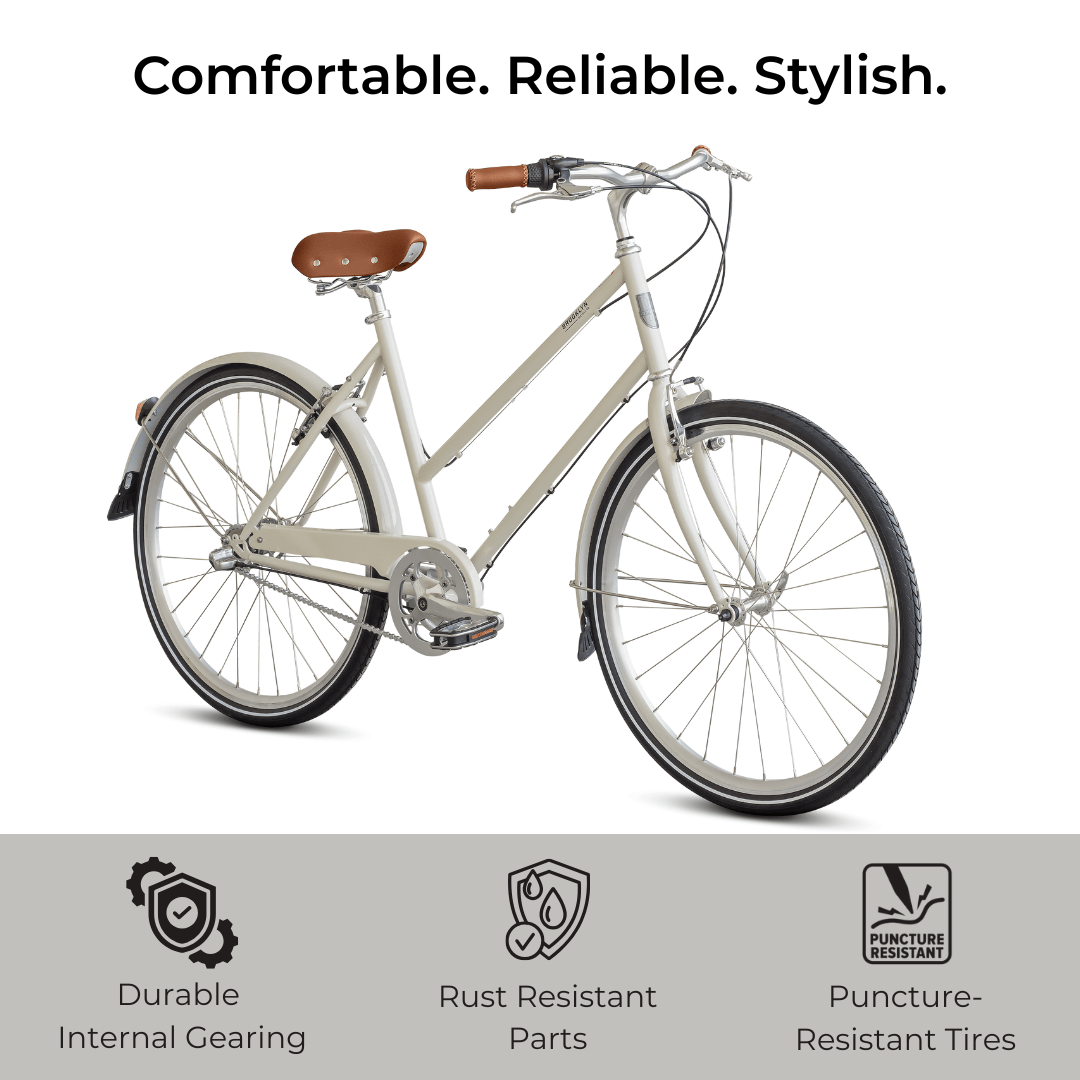
The Franklin 3
Classic Dutch-inspired design, color-matched fenders and chainguard, internal 3-speed hub. The most accessible step-through in the lineup.
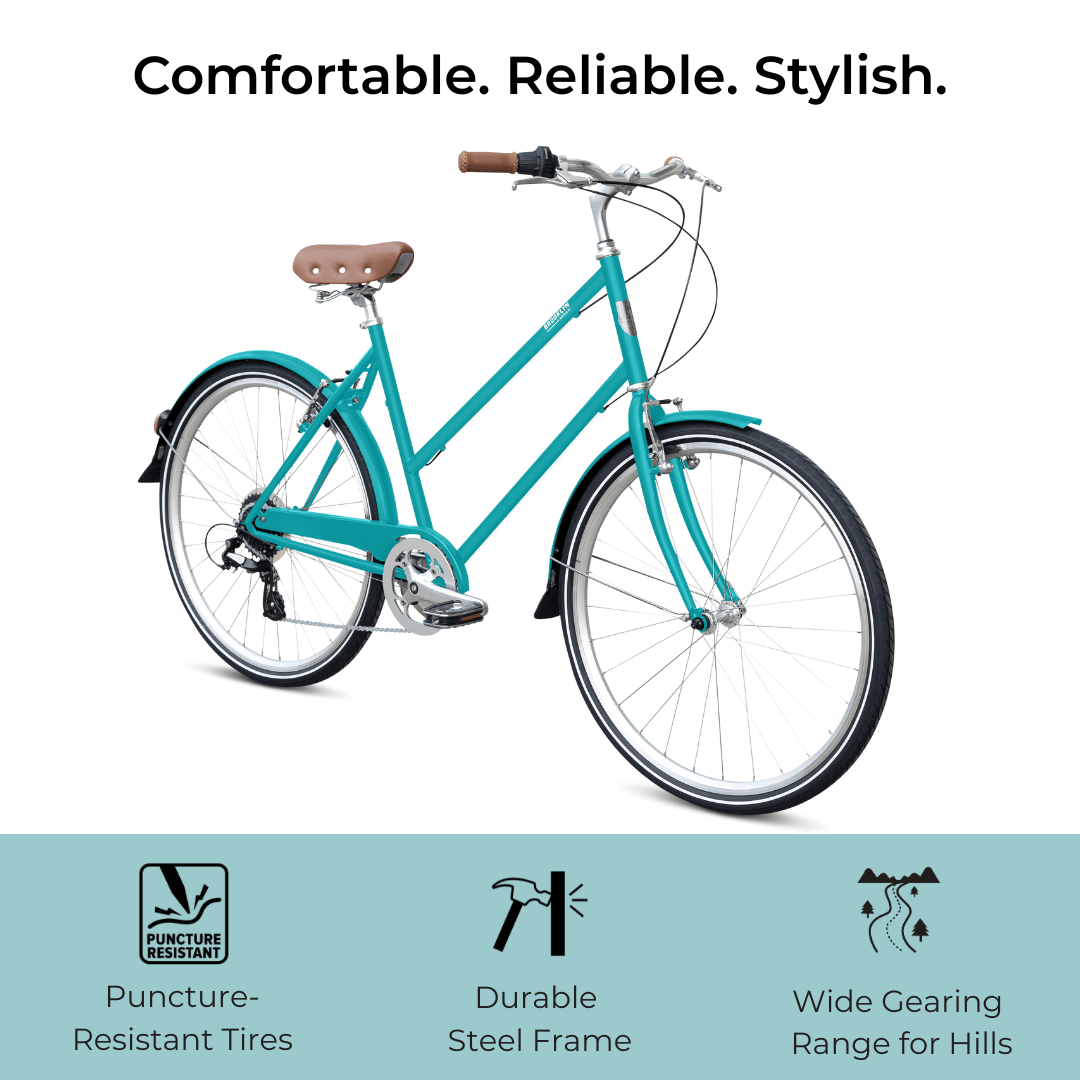
The Franklin 8
The same classic Franklin design with an 8-speed internal hub for wider gearing range — better for hills and longer commutes.
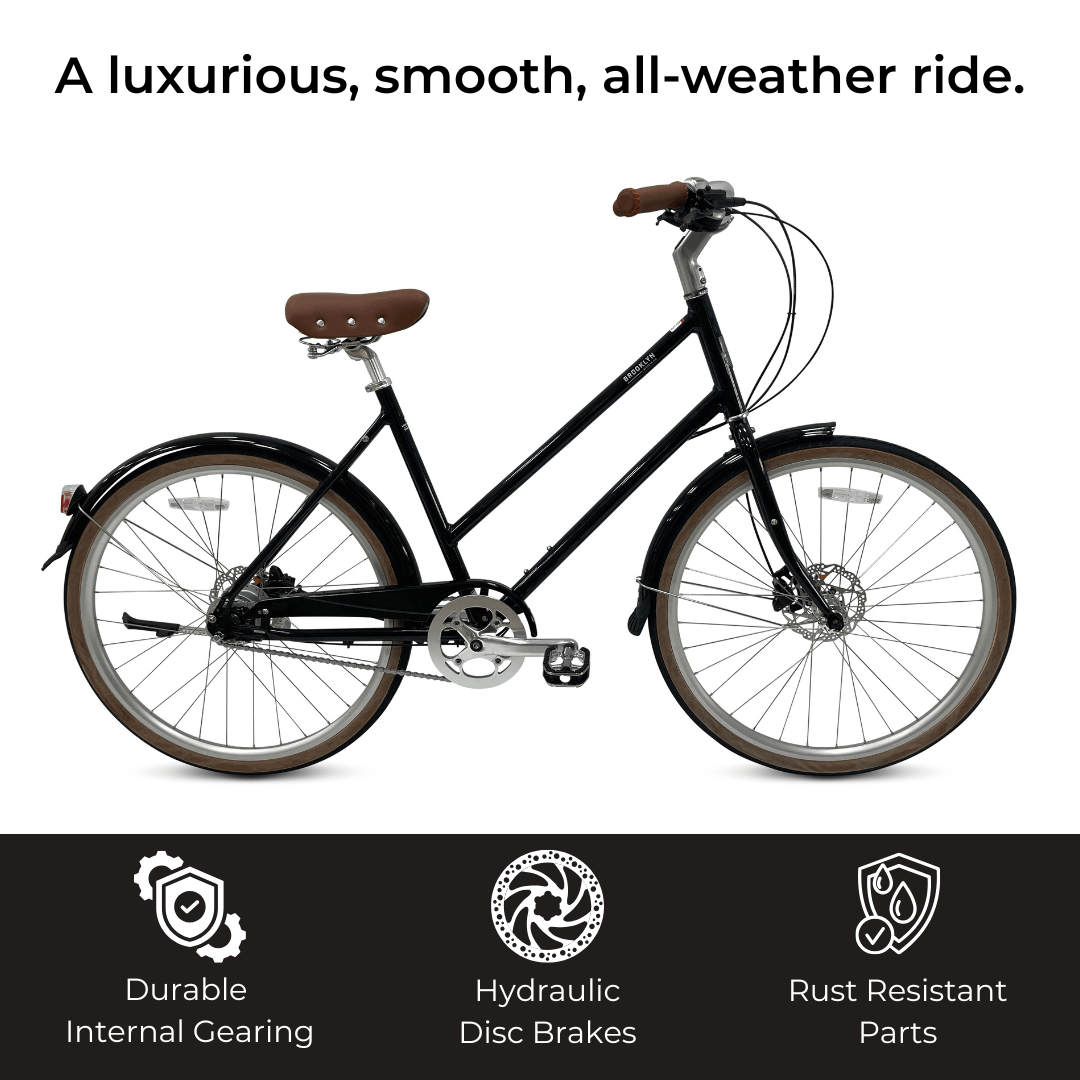
The Willow 8 Disc
The premium step-through. Internal 8-speed hub, hydraulic disc brakes for all-weather stopping, refined build for daily commuting.
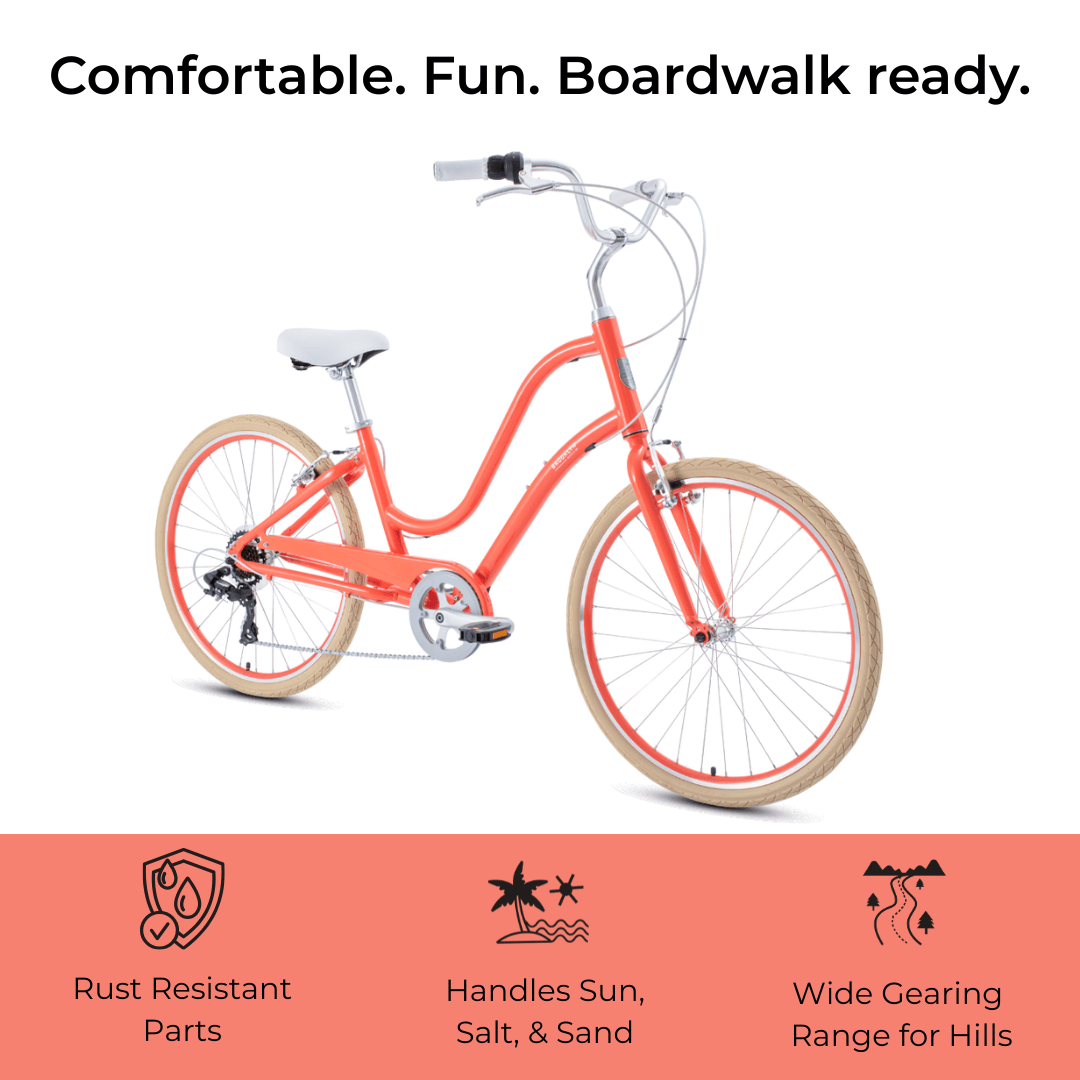
The Brighton 7
The most relaxed step-through. A laid-back cruiser with upright geometry built for the boardwalk.
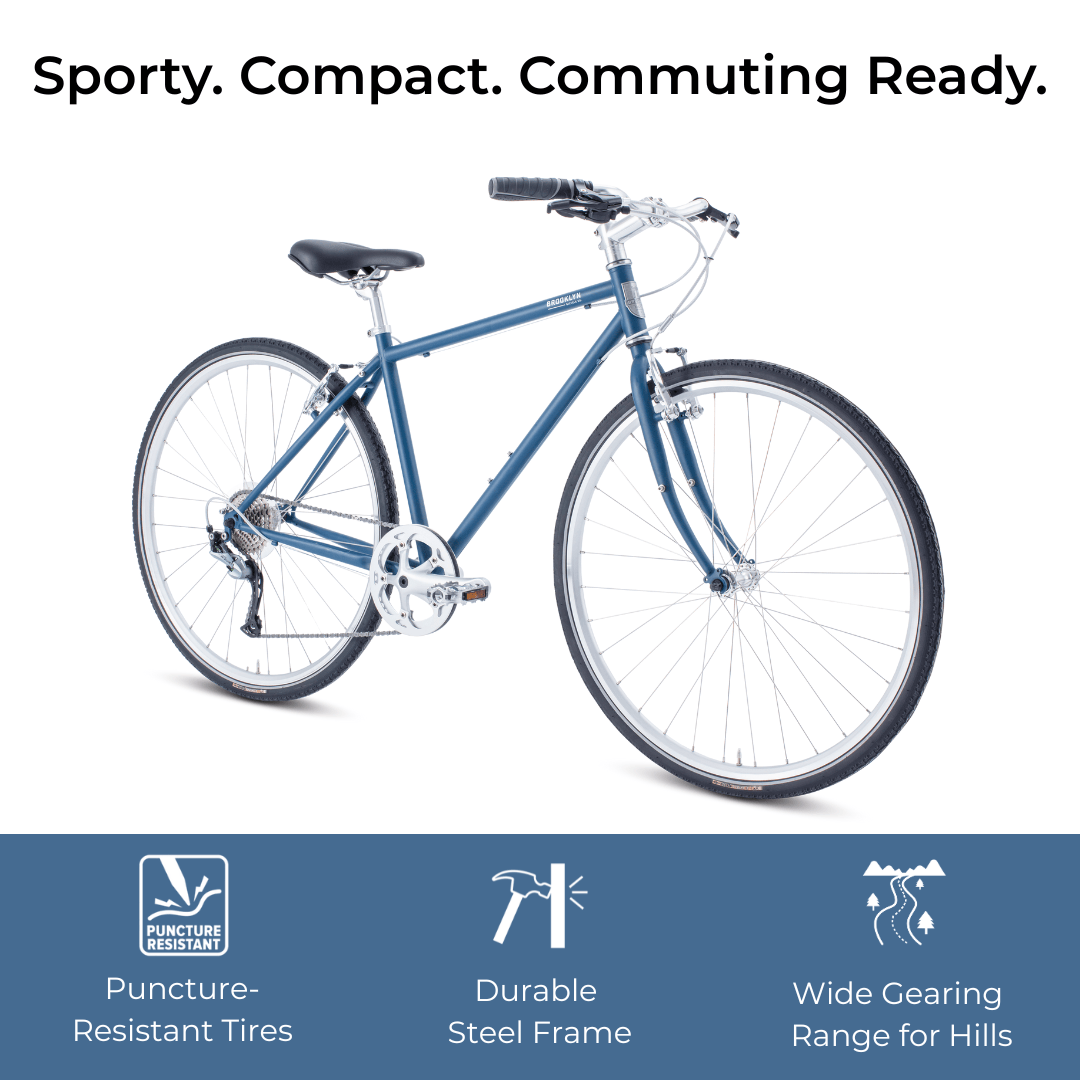
The Lorimer
A hybrid step-through built for fitness and commuting. Sportier geometry, lightweight frame, multi-speed gearing for varied terrain.
Diamond frame models
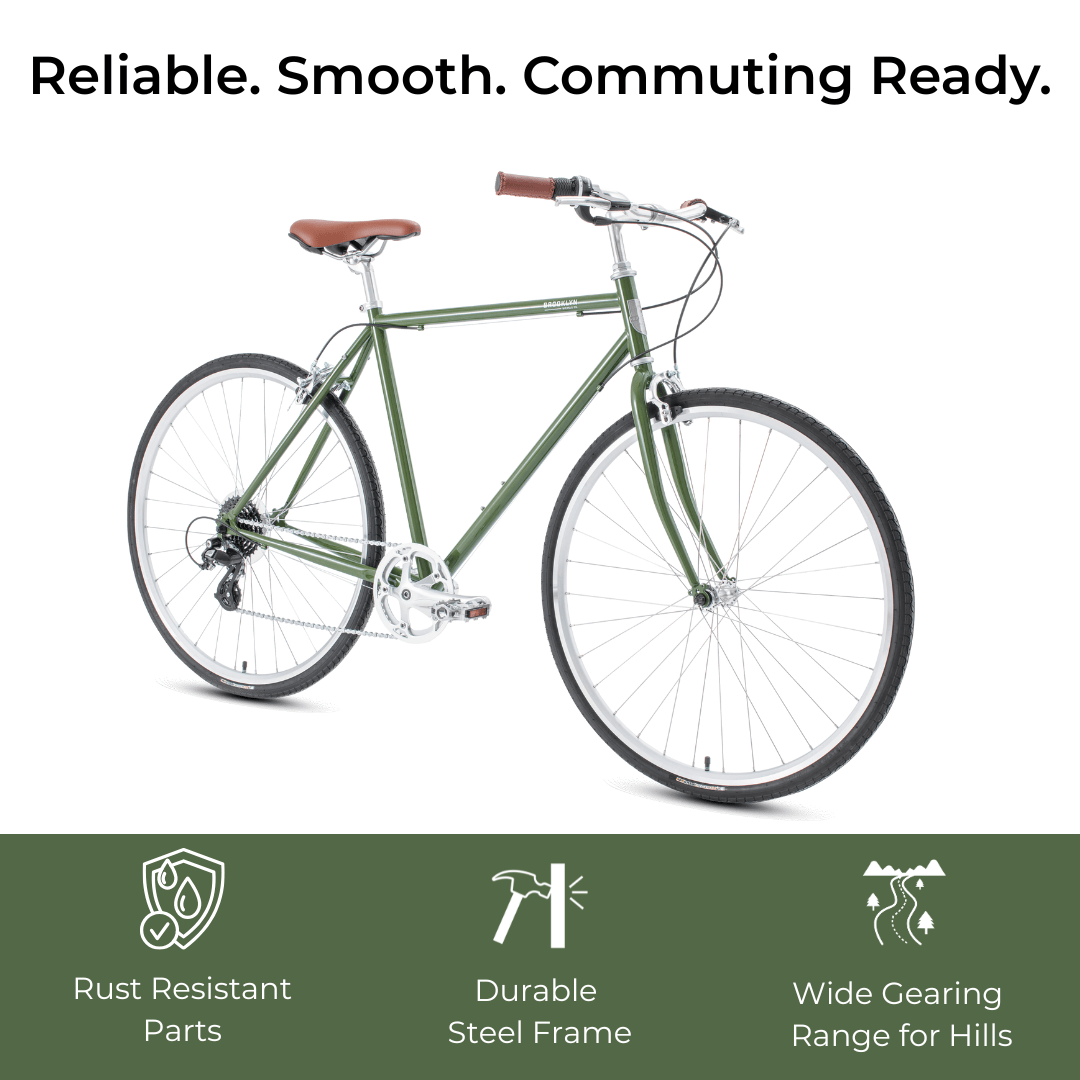
The Bedford 8
The classic diamond frame. Upright riding position, 8-speed drivetrain, classic city bike proportions. Great for everyday commuting.

The Roebling
The most performance-oriented city bike in the lineup. Lightweight chromoly frame, wide gear range, built for longer distances and mixed terrain.

The Driggs 8
Full fenders, internal 8-speed hub, and hydraulic disc brakes. Built for all-weather commuting with a classic upright riding position.
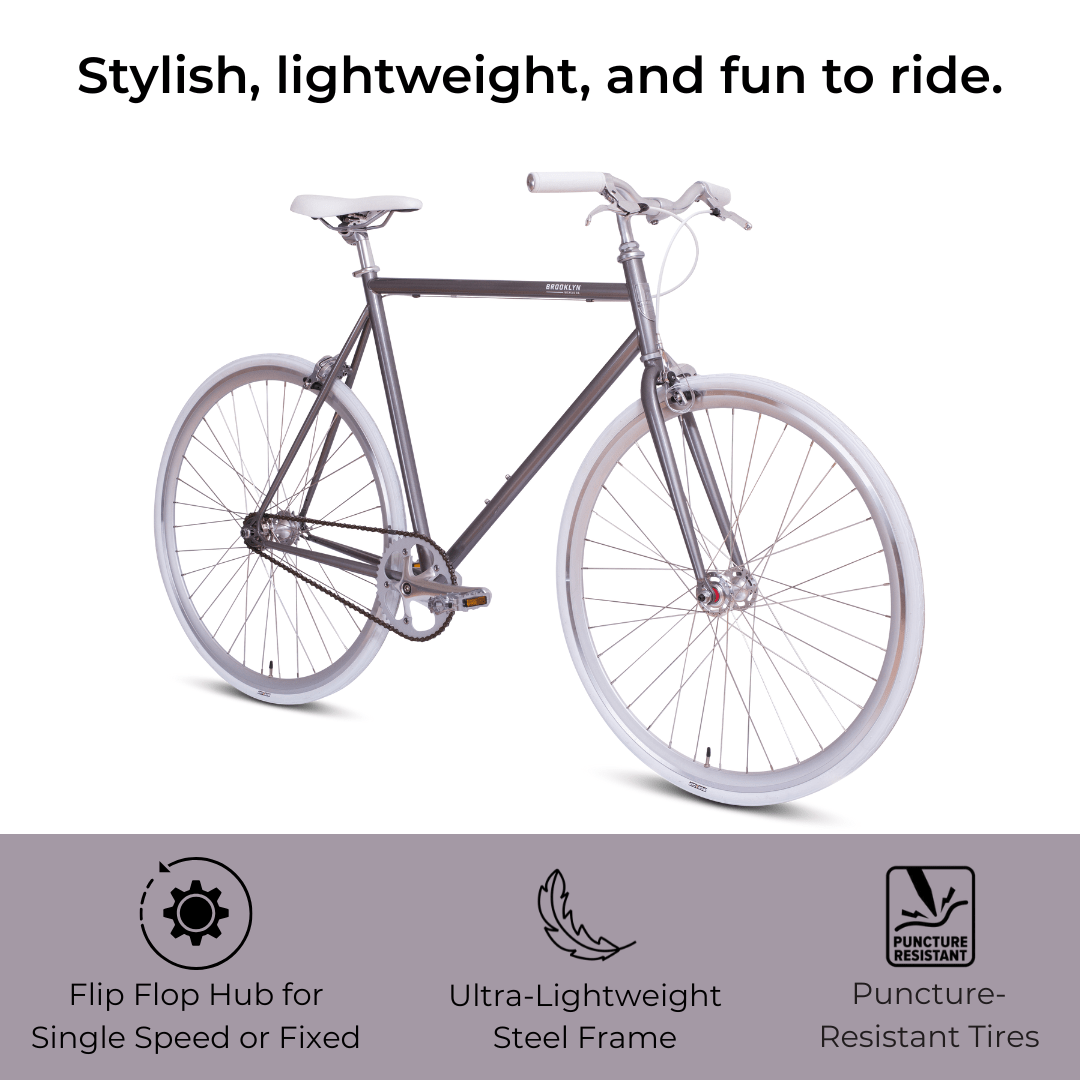
The Wythe
Single speed, fixie-capable, chromoly frame. The simplest bike in the lineup — for riders who want nothing between them and the road.
Frequently asked questions
What is the difference between a step-through and a diamond frame bike?
A step-through bike has a low or absent top tube, letting riders mount without swinging a leg over the rear of the bike. A diamond frame has a traditional triangulated structure with a top tube running from the head tube to the seat tube. Step-through bikes are easier to mount and dismount; diamond frame bikes are marginally lighter and stiffer.
Is a step-through bike only for women?
No. Step-through bikes are unisex. The frame design has no relationship to gender. They're popular with men and women alike, particularly in European cities where ease of mounting is prioritized for practical everyday riding. Brooklyn Bicycle Co.'s step-through models are ridden in equal measure across all riders.
Which frame is better for carrying cargo or a child seat?
Step-through frames are significantly better for rear cargo and child seats. The low or absent top tube lets riders mount and dismount without kicking over cargo or a rear seat. Diamond frame bikes require swinging a leg over the rear, which becomes awkward and potentially unsafe with a loaded rear rack or a child in a seat.
Is a diamond frame bike lighter than a step-through?
Generally yes, but the difference at the city bike level is modest — often just a pound or two. The triangulated diamond structure is structurally efficient, allowing thinner tubing elsewhere. For most riders, the weight difference between comparable models is not meaningful in daily use. If weight is your primary concern, compare the published specs of specific models rather than relying on frame type alone.
Which frame type is better for commuting?
Both work well for commuting. Step-through frames suit riders who make frequent stops, wear work attire, or carry rear cargo. Diamond frame bikes suit riders who prioritize a slightly lighter, sportier feel without cargo concerns. The best choice depends on your specific route and daily habits — not the frame type in the abstract.
Which Brooklyn Bicycle Co. models are step-through, and which are diamond frame?
Step-through models: the Franklin 3, Franklin 8, Willow 8 Disc, Brighton 7, and Lorimer. Diamond frame models: the Bedford 8, Roebling, Driggs 8, and Wythe. All models include free professional assembly through the Buy & Ride program.
Not sure which is right for you?
Take the Bike Finder quiz or browse by frame type.

Free guide
From the brand with 1,400+ five-star reviews. No spam, unsubscribe anytime.



We build bikes for vivid lives—for taking adventures, reconnecting with old friends, discovering new neighborhoods and exploring hidden gems. Inspired by the streets of Brooklyn, our bikes are built for style, comfort, and durability. Made with top quality parts, crafted with care, and sold at an affordable price, your bike is yours for life. We scrutinize every component for maximum sustainability and performance, and every millimeter of the frame for ultimate comfort and style. We take pride in our process, in our products, and in the people who sell them.