


Best Bike for a 10-Mile Commute on Flat Roads
Ten miles each way is the distance where bike commuting stops being a novelty and starts being a real transportation decision. You need something efficient enough that the ride doesn't eat your morning, comfortable enough that you're not wrecked when you arrive, and durable enough to handle it five days a week without constant maintenance.
If your route is mostly flat, you have more options than someone grinding up hills. But "flat" doesn't mean "easy" at 10 miles. The wrong bike turns a 40-minute ride into an hour. The right one makes it feel shorter than your old car commute.
In this article, we'll break down what makes a good bike for a 10-mile flat commute and recommend the best commuter bikes for the job.
What Makes a Good 10-Mile Flat Commuter
At this distance, three things separate a bike that works from one that doesn't: rolling efficiency, riding position, and low maintenance.
Rolling efficiency is about tires and weight. Wider tires absorb road imperfections but create more drag. Narrower tires roll faster but punish you on rough pavement. For flat city roads, 32mm to 38mm tires hit the sweet spot. You want puncture resistance built in -- fixing a flat on the way to work is a commute-killer.
Riding position matters more at 10 miles than at 3. A fully upright comfort bike position is great for short trips but creates wind resistance that adds up over longer distances. A slightly forward-leaning hybrid bike position lets you cover ground faster without the aggressive crouch of a road bike. You should arrive alert, not sore.
Low maintenance means fewer missed commutes. Internally geared hubs, rust-resistant components, and quality tires that don't flat every week. Your commuter bike needs to be ready every morning without fussing over it every weekend.
Do You Need Gears on Flat Roads?
This is the most common question, and the answer depends on how flat "flat" really is.
If your route is genuinely pancake-flat with no bridges, overpasses, or headwinds, a single-speed bike is the simplest, lightest, cheapest option. No derailleurs to adjust, no cables to replace, no shifting to think about. You pick a gear ratio and go.
But most "flat" commutes have a few variables: a bridge overpass, wind coming off the water, a loaded pannier on grocery day, or tired legs on Friday afternoon. Even 3 to 8 gears gives you the flexibility to adjust effort without grinding or spinning out. For 10 miles, that flexibility compounds. A gear too hard costs you energy you'll want at mile eight.
Our recommendation: if your route is truly flat and you value simplicity, go single-speed. If there's any variability, a geared commuter bike or city bike will serve you better. You'll never regret having gears.
Best Bikes for a 10-Mile Flat Commute
Each of these handles a 10-mile flat commute differently. The right choice depends on your priorities: speed, simplicity, comfort, or all-weather reliability. All of our best-selling bikes come with free shipping and free pro assembly.
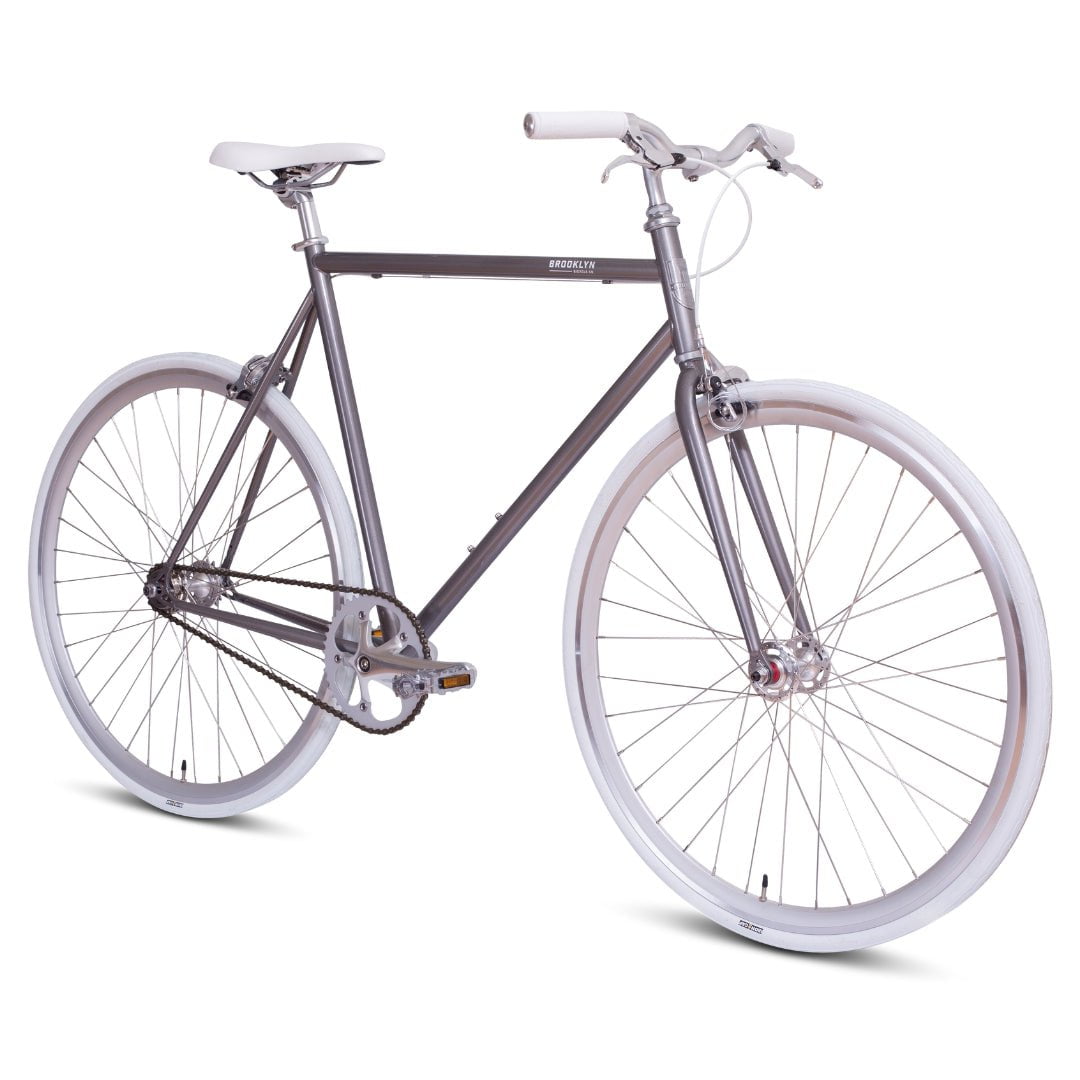
1. Fast and Simple: Wythe Single Speed / Fixed Gear Bike
Price: $599.99
The Wythe is a single-speed/fixed-gear bike built for riders who want the most direct connection between effort and speed. At under 25 lbs, it's one of the lightest commuter bikes you'll find at this price. The chromoly steel frame absorbs road vibration without the dead feel of aluminum, and the flip-flop hub lets you switch between fixed gear and freewheel depending on your preference.
Best for: experienced commuters on genuinely flat routes who want minimal maintenance and maximum speed. This is the bike that makes 10 miles feel like 7.
Highly rated by customers (4.88 out of 5 stars) for being lightweight, smooth-riding, and requiring almost zero maintenance.
Specs:
Frame: Ultra-lightweight 4130 CrMo frame
Fork: Brooklyn Bicycle Co. custom steel fork
Tires: Puncture-resistant 700c x 28
Weight: ~24 lbs.
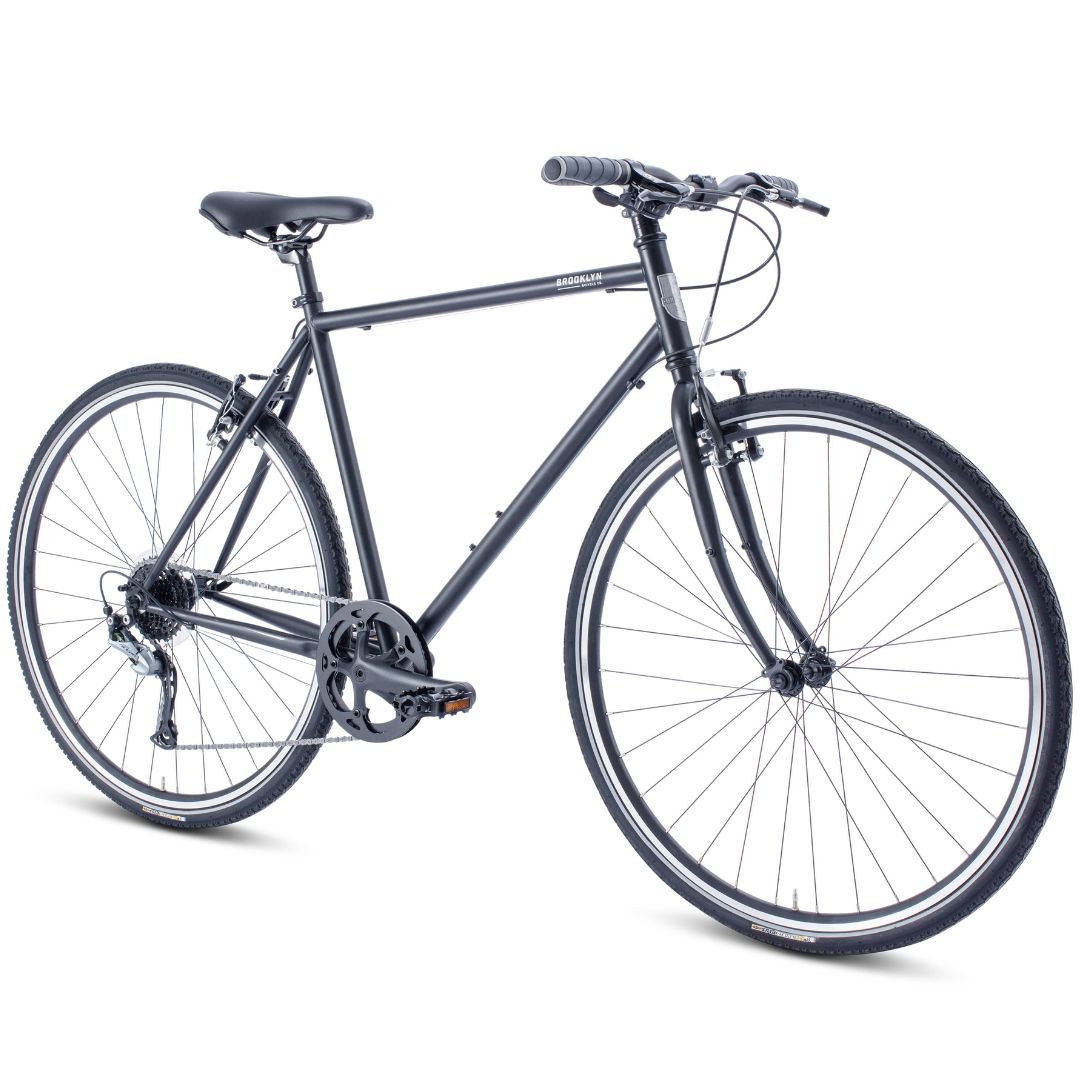
2. Versatile All-Rounder: Roebling 9-Speed Commuter Bike
Price: $699.99
The Roebling is a 9-speed hybrid with a wide gearing range that handles flat roads efficiently while giving you options for bridges, headwinds, or loaded rides. The double-butted chromoly steel frame keeps weight low while the puncture-resistant tires mean fewer mornings spent patching tubes. At 10 miles, the 9-speed Shimano drivetrain lets you find the exact cadence that keeps you moving without burning out.
Best for: commuters who want one bike that handles everything. Flat roads, slight grades, grocery runs, weekend rides. The Roebling doesn't specialize. It just works.
Highly rated by customers (4.92 out of 5 stars, 119 reviews) for being well-built, easy to purchase, and having helpful customer service.
Specs:
Frame: Lightweight Double-Butted 4130 CrMO hybrid frame with fender/rack mount eyelets
Fork: Brooklyn Bicycle Co. custom steel fork with fender & front carrier eyelets
Tires: Puncture-resistant 700c x 35c tires with high-visibility reflective stripe
Weight: ~28 lbs.
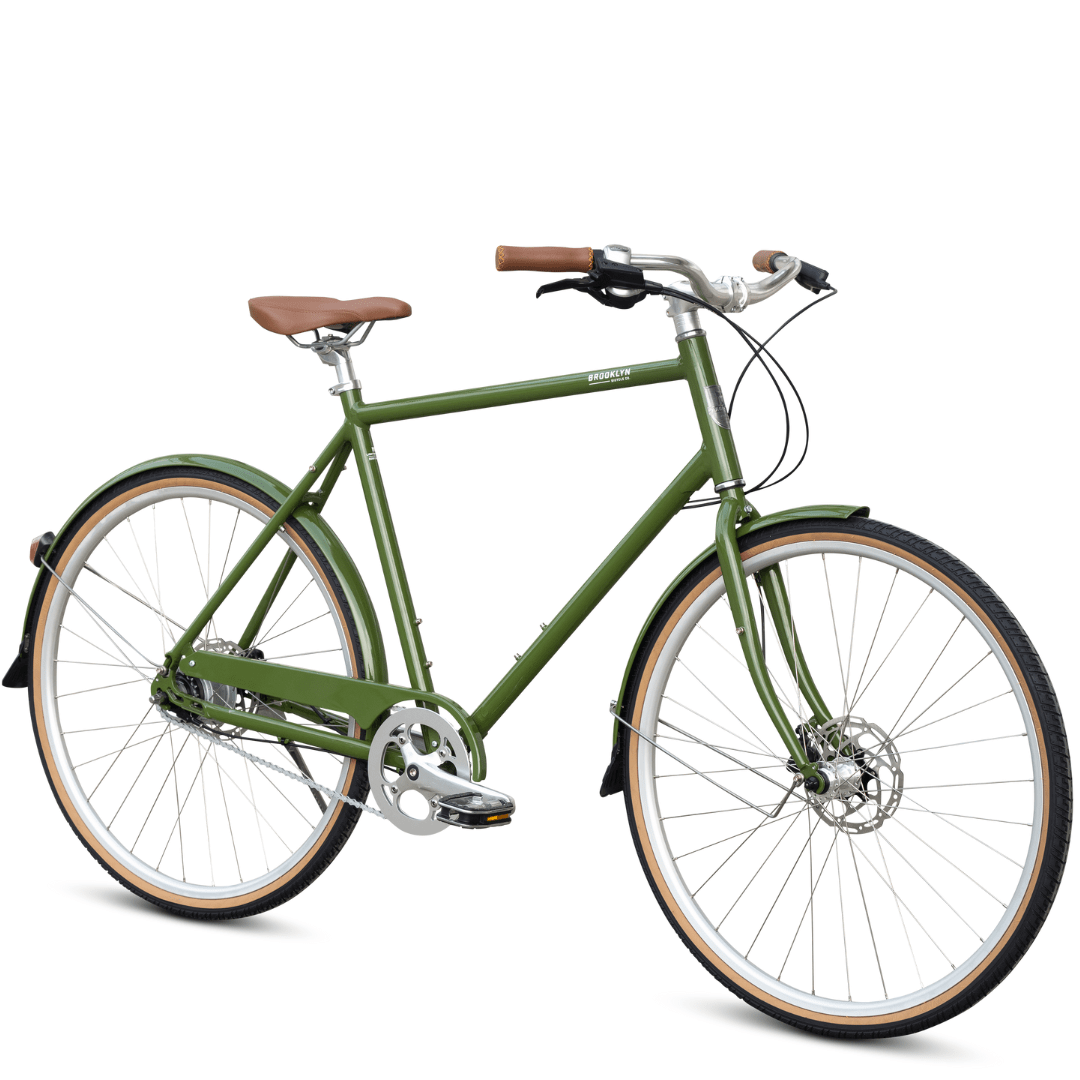
3. All-Weather Workhorse: Driggs 8i Disc Commuter Bike
Price: $1,199.99
The Driggs 8i is built for commuters who ride in every condition. Hydraulic disc brakes stop consistently in rain and dry weather. The internally geared 8-speed hub means no exposed derailleur to clog with road grime, no cable stretch, and shifts that work the same on day one and day one thousand. Rust-resistant components throughout.
If you're commuting 10 miles year-round and your route includes wet roads, poor weather, or city debris, the Driggs pays for itself in reliability. It's the most capable commuter we've built.
Best for: year-round commuters in cities with real weather who want a bike they never have to think about maintaining.
Highly rated by customers (4.90 out of 5 stars, 97 reviews) for being low-maintenance, reliable in wet conditions, and comfortable on longer rides.
Specs:
Frame: Lightweight aluminum frame with fender/rack mount eyelets
Fork: Brooklyn Bicycle Co. custom steel fork with fender eyelets
Tires: Puncture-resistant 700c x 38c tires with skinwall
Weight: ~31 lbs.
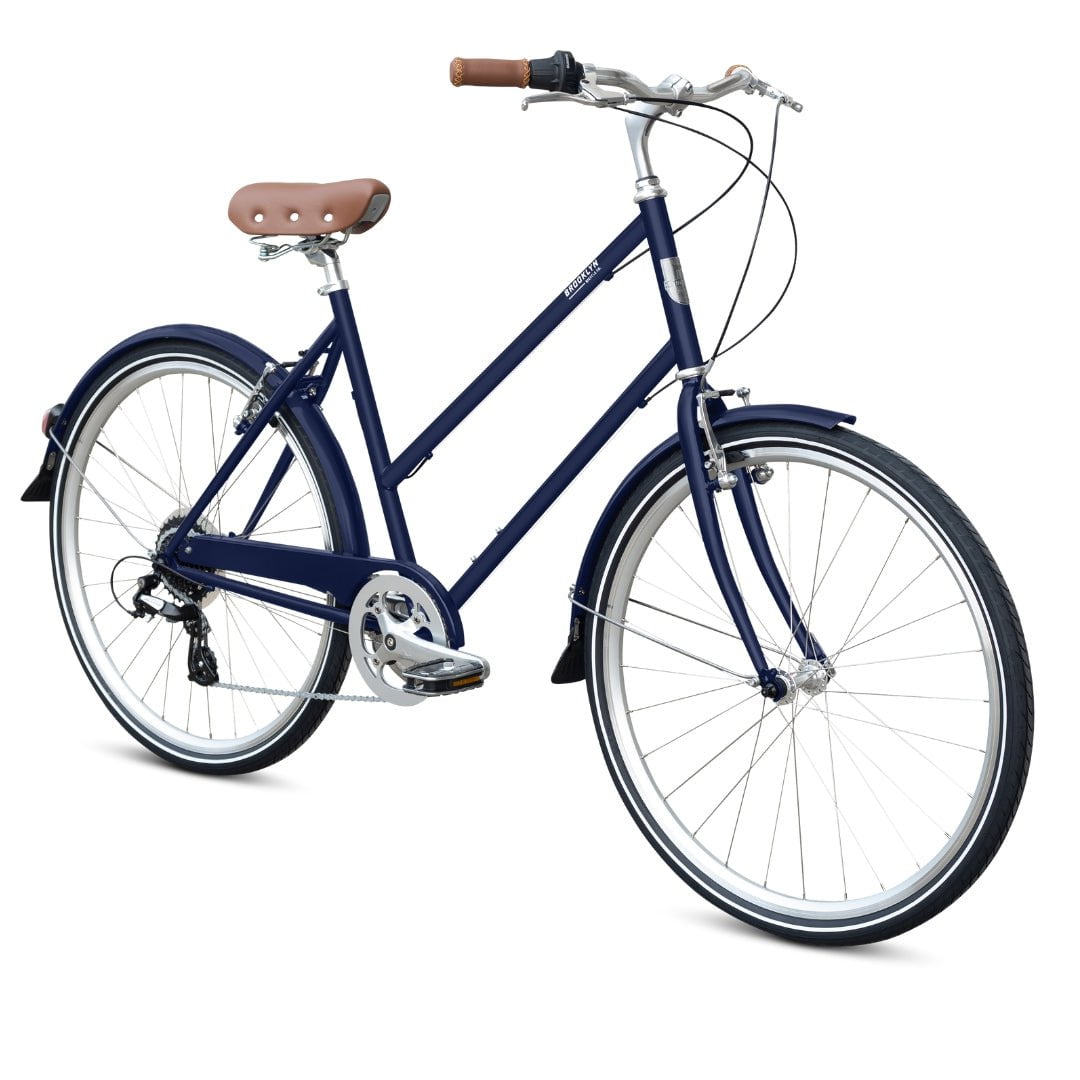
4. Step-Through Accessibility: Franklin 8 Speed City Bike
Price: $599.99
The Franklin 8 is a city bike with an 8-speed derailleur drivetrain in a step-through frame. The lower standover height makes mounting and dismounting easier -- practical if you're stopping frequently, carrying a bag, or just prefer not to swing a leg over a high top tube. Puncture-resistant tires and rim brakes keep things simple and reliable.
Best for: commuters who want easy gearing in a more accessible frame design. The step-through geometry makes it a favorite for riders of all ages and abilities.
Highly rated by customers (4.88 out of 5 stars) for being comfortable, smooth-riding, and easy to shift.
Specs:
Frame: Lightweight hi-tensile steel step through frame with rear carrier & down tube braze-ons
Fork: Brooklyn Bicycle Co. steel fork with fender & front carrier eyelets
Tires: Puncture-resistant 650b x 1.5" tires with high visibility reflective stripe
Weight: ~31 lbs.

Free guide
From the brand with 1,400+ five-star reviews. No spam, unsubscribe anytime.
Quick Comparison
| Bike | Price | Gears | Best For | Weight |
|---|---|---|---|---|
| Wythe | $599.99 | Single-speed | Speed, simplicity, flat routes | ~28 lbs |
| Roebling | $699.99 | 9-speed | Versatility, mixed conditions | ~28 lbs |
| Driggs 8i Disc | $1,199.99 | 8-speed internal | All-weather, low maintenance | ~31 lbs |
| Franklin 8 | $599.99 | 8-speed derailleur | Accessibility, comfort | ~31 lbs |
What to Wear and Bring for 10 Miles
At 10 miles, you're riding 35 to 50 minutes depending on pace and stops. That's long enough to work up a sweat in warm weather but short enough that you don't need full cycling kit.
What works: moisture-wicking base layer, regular work pants or shorts depending on your office, a light jacket you can stuff in a bag. Dedicated cycling shoes are optional at this distance. Flat pedals and comfortable shoes get the job done.
Bring a compact pump and a spare tube. Puncture-resistant tires reduce flats dramatically, but a 10-mile walk of shame is no one's idea of a good morning.
A rear rack changes everything for 10-mile commuters. A pannier bag carries your laptop, lunch, and a change of shirt without putting weight on your back. Less sweat, more comfortable ride. The Universal Rear Carrier fits all our commuter models.
How Long Does a 10-Mile Bike Commute Take?
On flat roads with moderate traffic, most commuters average 12 to 15 mph. That puts a 10-mile ride at 40 to 50 minutes. Experienced riders on efficient bikes (like the Wythe) can push closer to 30 to 35 minutes.
Factors that slow you down: traffic lights (the real time killer in cities), wind (more significant than most people expect over 10 miles), and bike weight. Factors that speed you up: learning the traffic signal timing on your route, finding protected bike lanes, and getting fitter over the first few weeks.
Most new bike commuters report their 10-mile commute takes about the same time as driving once you factor in parking and walking from the lot. The difference is you arrive more alert and skip the gym.
Frequently Asked Questions
Is 10 miles too far to bike commute?
No. Ten miles is a common and sustainable bike commute distance. On flat roads, it takes 40 to 50 minutes at a moderate pace. Many bike commuters ride 10 miles or more daily. The key is having the right bike and building up gradually during your first two weeks.
Do I need a road bike for a 10-mile commute?
A road bike is not necessary. Hybrid commuter bikes like the Roebling or Bedford 8 are designed specifically for this distance. They offer a more comfortable riding position than a road bike, wider tires for city roads, and practical features like rack mounts and puncture resistance that road bikes lack.
Is a single-speed bike good for a 10-mile flat commute?
Yes, if your route is genuinely flat. A single-speed like the Wythe is lighter, simpler, and requires less maintenance than a geared bike. The trade-off is that you cannot adjust gearing for headwinds, bridges, or tired legs. For purely flat routes, single-speed is an excellent choice.
How many calories does a 10-mile bike ride burn?
A 10-mile bike commute at moderate effort burns approximately 400 to 600 calories depending on your weight, speed, and conditions. That's roughly equivalent to running 4 miles. Over a five-day commute week, that's 2,000 to 3,000 calories -- significant fitness impact without a separate gym routine.
What's the best gear ratio for flat commuting on a single-speed?
For flat urban commuting, a gear ratio of 2.5:1 to 2.75:1 works well. This translates to something like a 44-tooth chainring and 16-tooth cog (2.75:1). It lets you maintain 15 mph at a comfortable cadence without spinning out at higher speeds or grinding at stops.
Should I get disc brakes for commuting?
Disc brakes are not required but are a significant upgrade for year-round commuters. They provide more consistent stopping power in wet conditions and require less hand effort. The Driggs 8i features hydraulic disc brakes. For fair-weather commuters, the rim brakes on the Roebling and Wythe are reliable and easier to maintain.
Still not sure which bike you need? Take our 1-minute bike finder quiz.

Free guide
From the brand with 1,400+ five-star reviews. No spam, unsubscribe anytime.



We build bikes for vivid lives—for taking adventures, reconnecting with old friends, discovering new neighborhoods and exploring hidden gems. Inspired by the streets of Brooklyn, our bikes are built for style, comfort, and durability. Made with top quality parts, crafted with care, and sold at an affordable price, your bike is yours for life. We scrutinize every component for maximum sustainability and performance, and every millimeter of the frame for ultimate comfort and style. We take pride in our process, in our products, and in the people who sell them.

