Rim Brakes vs. Disc Brakes: What Actually Matters for City Riding
Rim brakes vs. disc brakes: what actually matters for city riding
Disc brakes are one of the most oversold features in cycling. Here's an honest breakdown of what each brake type does well, when the difference matters, and how to choose without getting played by marketing.
Walk into any bike shop or scroll any product page and you'll see disc brakes listed as a selling point. They dominate modern bike marketing. The implication is always the same: disc brakes are better, rim brakes are outdated, and any serious rider should upgrade.
That's not accurate. For most city riders, it isn't even close to true. This guide explains what rim brakes and disc brakes each do well, when the difference actually matters, and how to make the right call for your riding — not your spec sheet.

Free · 26 pages of tips
From the brand with 1,400+ five-star reviews. No spam, unsubscribe anytime.
How each brake system works
Rim brakes
Rim brakes slow a bike by squeezing rubber pads against the rim of the wheel. The friction created between the pads and the rim surface does the stopping. They're the original bicycle brake design — simple, light, and proven over more than a century of riding.
Modern rim brakes come in a few variants: dual-pivot calipers (common on city and road bikes), V-brakes or linear pull brakes (common on hybrid bikes), and cantilever brakes (older designs, now rare). All work on the same principle. For the purposes of this guide, "rim brakes" means the whole category.
Disc brakes
Disc brakes slow a bike by squeezing a caliper against a metal rotor (the disc) mounted to the wheel hub, rather than against the rim. Because the stopping happens at the hub rather than the rim, disc brakes are less affected by wet or muddy rims — which is their primary real-world advantage.
Disc brakes come in two types: mechanical (cable-actuated, same as rim brakes) and hydraulic (fluid lines replace cables). The difference between these two matters almost as much as the rim vs. disc decision itself — which we'll cover below.
The honest comparison
| Rim brakes | Mechanical disc | Hydraulic disc | |
|---|---|---|---|
| Stopping power (dry) | Excellent | Excellent | Excellent |
| Stopping power (wet) | Good | Very good | Excellent |
| Lever feel / hand effort | Light to moderate | Heavier pull | Very light |
| Modulation | Good | Moderate | Excellent |
| Weight | Lightest | Heavier | Heavier |
| Maintenance | Simple — pads and cable | Simple — cable adjustment | Requires periodic bleeding |
| Cost | Lowest | Mid | Highest |
| Self-adjusting pads | No | No | Yes |
| Performance on long descents | Fades under sustained load | Consistent | Excellent |
| Best for | City, commuting, flat terrain | Budget disc option | Hills, heavy rain, cargo |
Rim brakes: still the right choice for most city riders
Rim brakes have been stopping bicycles effectively for decades. For the vast majority of urban riding — flat to moderately hilly streets, average weather conditions, no heavy cargo — they do the job completely.
Rim brakes are not a compromise. They are the appropriate choice for most city and recreational riders. Disc brakes are not inherently safer — they're situationally advantageous in specific conditions that most urban riders rarely encounter.
What rim brakes do well
Advantages
- Strong, reliable stopping in dry conditions
- Lightest brake system — less added weight
- Simple maintenance — pads and cables are inexpensive and easy to replace
- Lower cost — budget goes further on other components
- Effective in light to moderate rain
Limitations
- Reduced effectiveness in heavy, sustained rain
- Performance degrades on long, steep descents under heavy braking
- Rim wear over time — pads gradually abrade the braking surface
- Less effective with wide tires on some frames
Disc brakes: genuinely better in specific conditions
Disc brakes are excellent technology. The advantages are real — they're just not universal necessities. The riders who benefit most from disc brakes share a specific set of conditions that differ from the average city commuter.
Rim brakes are the right call if you…
- Ride primarily on flat to moderately hilly streets
- Ride in typical urban weather — not heavy rain daily
- Don't carry heavy rear cargo or loads
- Want the lightest, simplest, most maintainable setup
- Are working with a budget and want better components elsewhere
Disc brakes are worth it if you…
- Commute daily in heavy rain — reliably, consistently
- Navigate steep hills or long descents regularly
- Carry significant cargo or a rear child seat
- Prefer a lighter lever feel with less hand fatigue
- Want maximum all-weather confidence
If you do want disc brakes: mechanical vs. hydraulic matters a lot
Once you've determined disc brakes fit your riding, the next decision is which type. This distinction matters more than most buyers realize — and it's where a lot of the checkbox spec problem shows up.
Mechanical disc brakes
Mechanical disc brakes use a steel cable — the same system as rim brakes — to pull the caliper against the rotor. They're simpler, less expensive, and serviceable at home. The tradeoff is a heavier lever pull, less precise modulation, and the need for periodic cable tension adjustment as the cable stretches.
They can work well. But quality varies enormously, and this is where the checkbox spec problem does its worst damage.
Many brands spec mechanical disc brakes primarily so they can list "disc brakes" on the spec sheet — not because the components deliver meaningfully better performance. A single-piston mechanical caliper with a minimal rotor on a budget bike may stop no better than strong rim brakes, while adding weight, complexity, and a fussier maintenance requirement.
Disc brakes should be spec'd for performance reasons, not marketing optics. Brooklyn Bicycle Co. only offers disc brakes on models where hydraulic systems are used — because hydraulic is where disc brakes make a genuine performance argument.
Hydraulic disc brakes
Hydraulic disc brakes replace the cable with sealed fluid lines. The result is a lighter lever feel, more consistent braking force, better modulation, and self-adjusting pads that compensate for wear automatically. In heavy rain and on steep descents, the performance advantage over rim brakes becomes genuinely noticeable.
The tradeoffs: higher cost, and the need for periodic brake bleeding — a straightforward procedure for a mechanic, but not something most riders handle at home. For all-weather commuters and riders who regularly tackle hills, hydraulic disc brakes are the brake system worth paying for.
Hydraulic disc — advantages
- Excellent stopping power in all conditions
- Very light lever feel — less hand fatigue
- Superior modulation — more precise control
- Self-adjusting pads as they wear
- Consistent performance on long descents
Hydraulic disc — limitations
- Higher upfront cost
- Requires periodic bleeding by a mechanic
- Heavier than rim brake systems
- Overkill for most flat urban riding
The question that actually matters
Stop asking: "Does this bike have disc brakes?"
Start asking: "Do I ride in conditions where disc brakes offer a meaningful advantage?"
For most city riders — commuting on flat to moderately hilly streets, in average weather, without heavy cargo — rim brakes deliver everything they need. The money saved goes toward a better frame, better gearing, or better components elsewhere.
For riders who regularly navigate steep hills, ride in consistent heavy rain, or carry significant loads, hydraulic disc brakes are genuinely worth it. Not mechanical disc brakes at the entry-level price — hydraulic, where the technology actually performs as advertised.
The best brake system isn't the one that sounds most advanced. It's the one that fits how you actually ride. Don't let a spec sheet make this decision for you.
Frequently asked questions
Are disc brakes better than rim brakes for city riding?
Not necessarily. For most city riders on flat to moderately hilly terrain in average weather conditions, high-quality rim brakes are entirely sufficient. Disc brakes offer real advantages in heavy rain, on steep descents, and for riders carrying heavy cargo — but these conditions describe a minority of urban riders. The brake system that fits your actual riding conditions is better than the one that sounds most advanced.
Do I need disc brakes for commuting?
Most commuters do not need disc brakes. If you ride on flat to moderately hilly streets, in typical weather conditions, without heavy cargo, rim brakes will stop your bike reliably and safely. Disc brakes become genuinely worthwhile if you ride in heavy rain daily, navigate steep hills, or carry significant rear loads regularly.
What is the difference between mechanical and hydraulic disc brakes?
Mechanical disc brakes use a steel cable to actuate the caliper — the same system as rim brakes, just squeezing a rotor instead of the rim. They are less expensive and easier to service at home but require more hand force and periodic cable adjustment. Hydraulic disc brakes use sealed fluid lines instead of cables. They provide more stopping power with less hand effort, self-adjust for pad wear, and perform more consistently in wet conditions. The tradeoff is higher cost and the need for periodic brake bleeding by a mechanic.
Are rim brakes safe?
Yes. Rim brakes have been stopping bicycles safely for over a century. Modern dual-pivot calipers and V-brakes provide strong, reliable stopping power for everyday urban riding. Rim brakes are not inherently less safe than disc brakes — they are situationally less advantageous in specific conditions like heavy rain or long steep descents, which most city riders rarely encounter.
Why do so many bikes have disc brakes now?
Disc brakes gained traction in mountain biking for legitimate reasons — better wet-weather performance, more consistent braking on long descents, and compatibility with wider tires. Once they became standard at the high end, they became shorthand for "premium." Many brands now spec disc brakes primarily so they can list it on the spec sheet, not because the rider's use case demands it. This is what Brooklyn Bicycle Co. calls the checkbox spec problem — and it's a reason to ask what kind of disc brakes a bike has, not just whether it has them.
Which Brooklyn Bicycle Co. bikes have disc brakes?
The Willow 8 Disc and Driggs 8 both feature hydraulic disc brakes — Brooklyn Bicycle Co.'s only disc brake models. Both are spec'd with hydraulic systems specifically because they offer meaningfully better performance than mechanical disc alternatives. All other Brooklyn Bicycle Co. models use rim brakes, which are entirely appropriate for their intended use cases.
Shop by brake type
Every Brooklyn Bicycle Co. bike is professionally assembled at a local shop through the Buy & Ride program.
Rim brake models
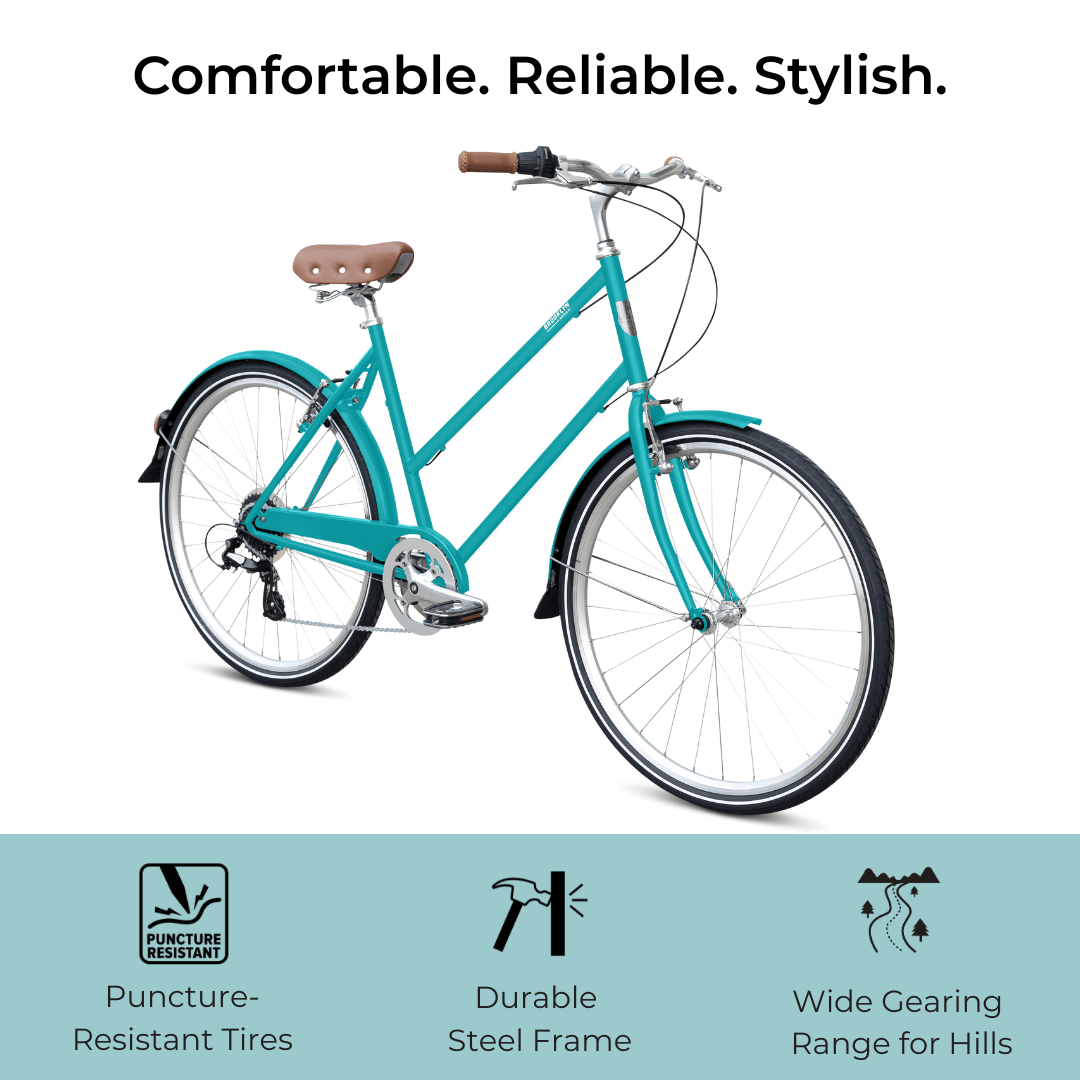
The Franklin 8
Step-through · 8-speed internal hub · Moderate to hilly terrain
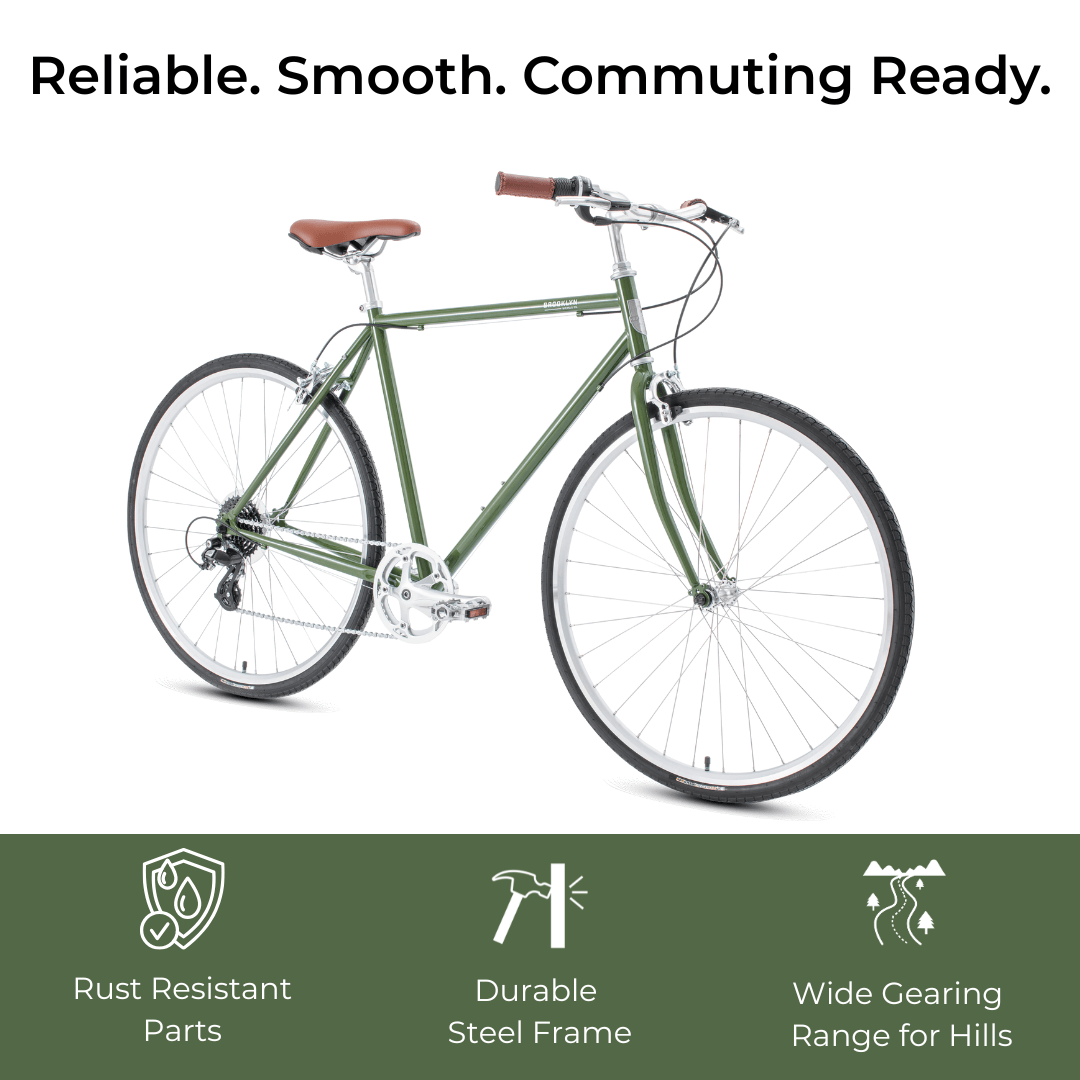
The Bedford 8
Diamond frame · 8-speed internal hub · Relaxed city riding

The Roebling
Diamond frame · Hybrid · Lightweight chromoly · Longer rides
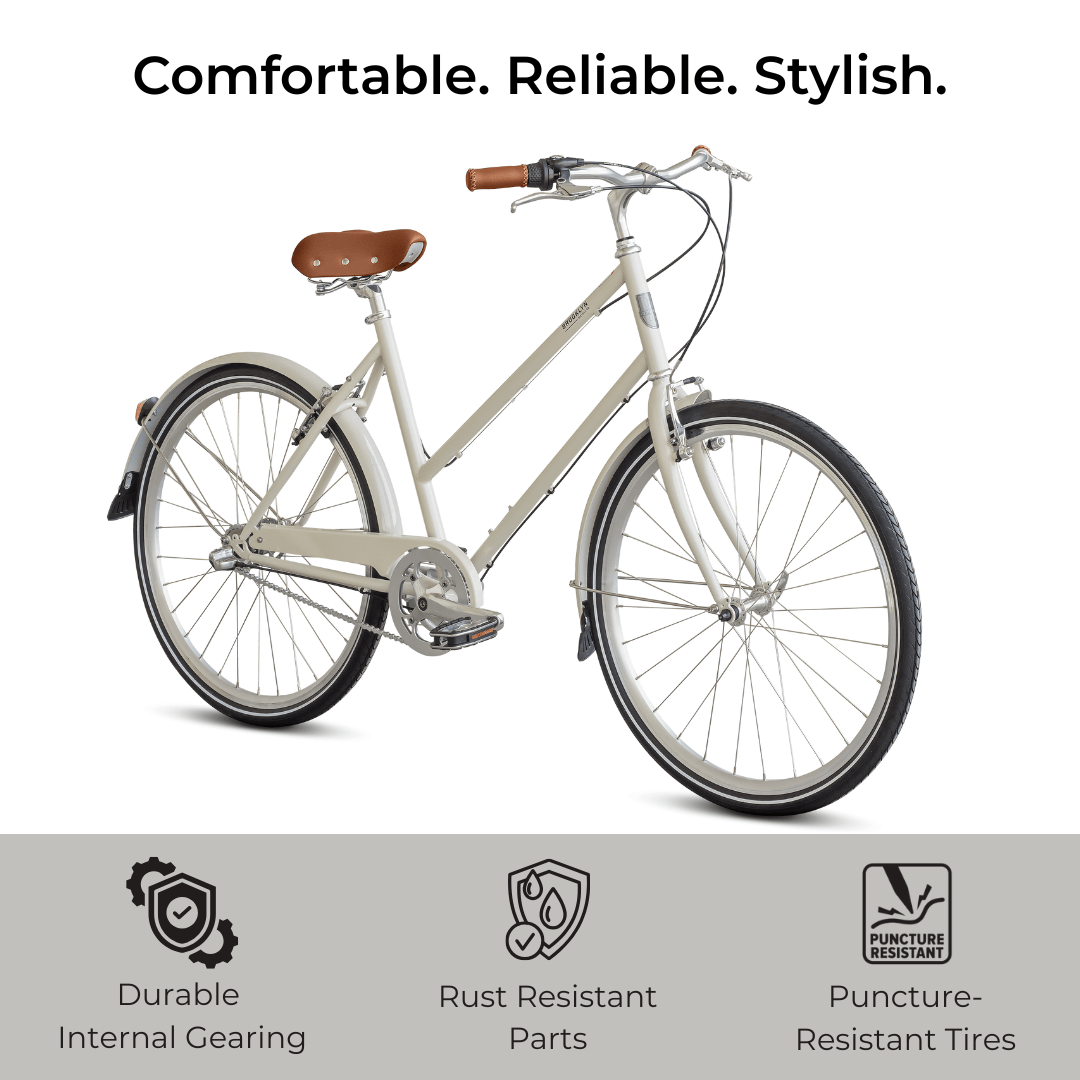
The Franklin 3
Step-through · 3-speed internal hub · Simple, flat-terrain riding
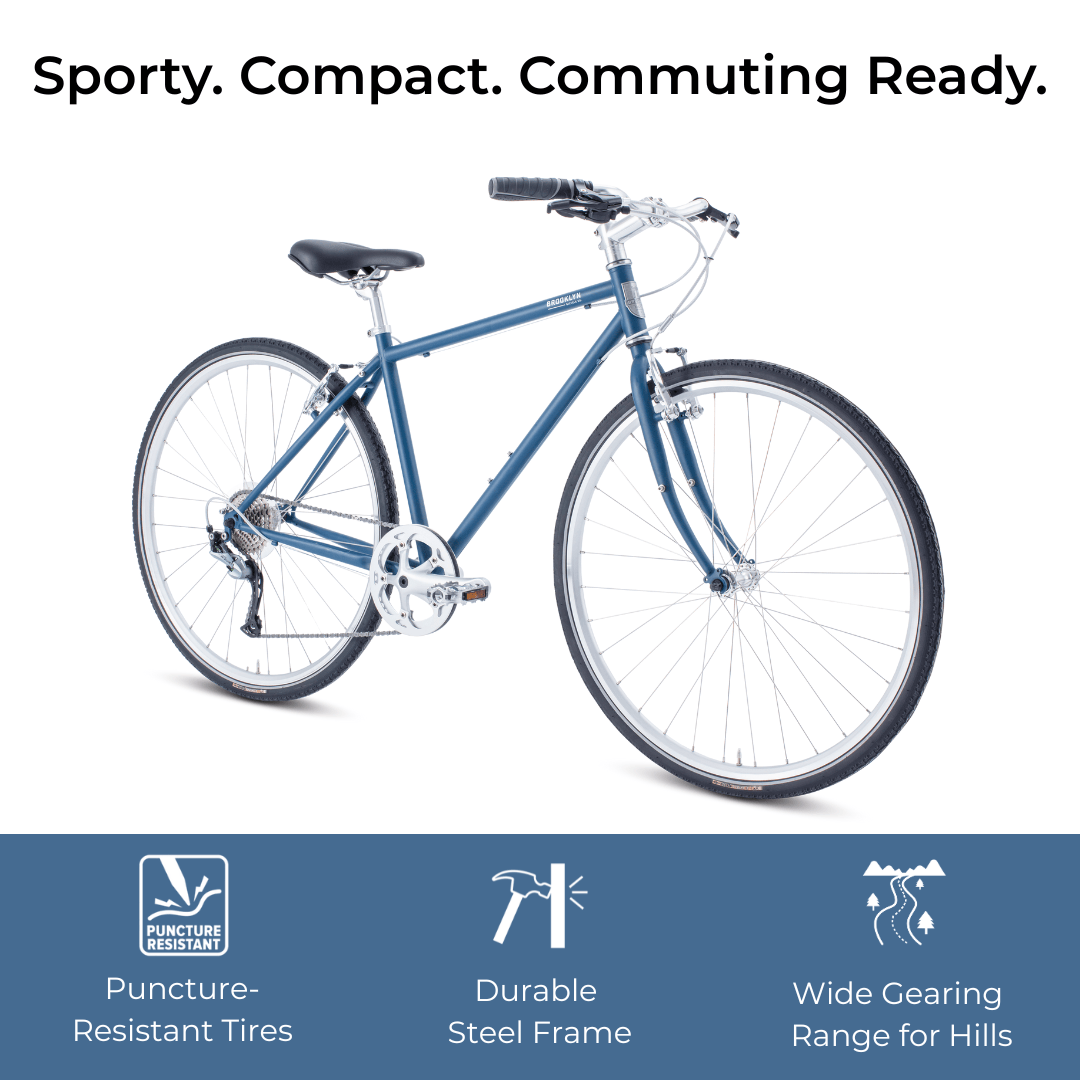
The Lorimer
Hybrid · Multi-speed · Fitness and commuting
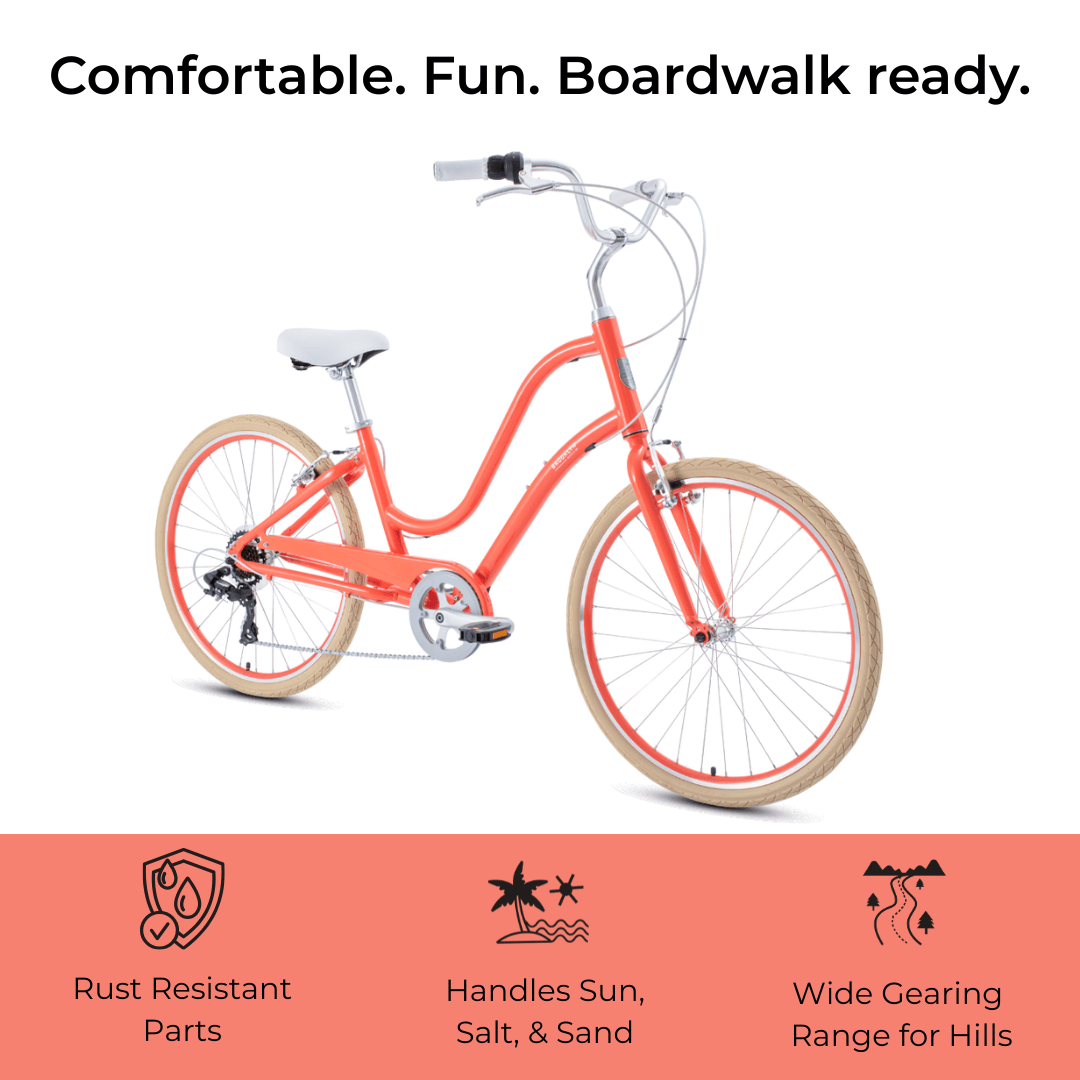
The Brighton 7
Step-through · 7-speed · Relaxed cruiser · Casual riding
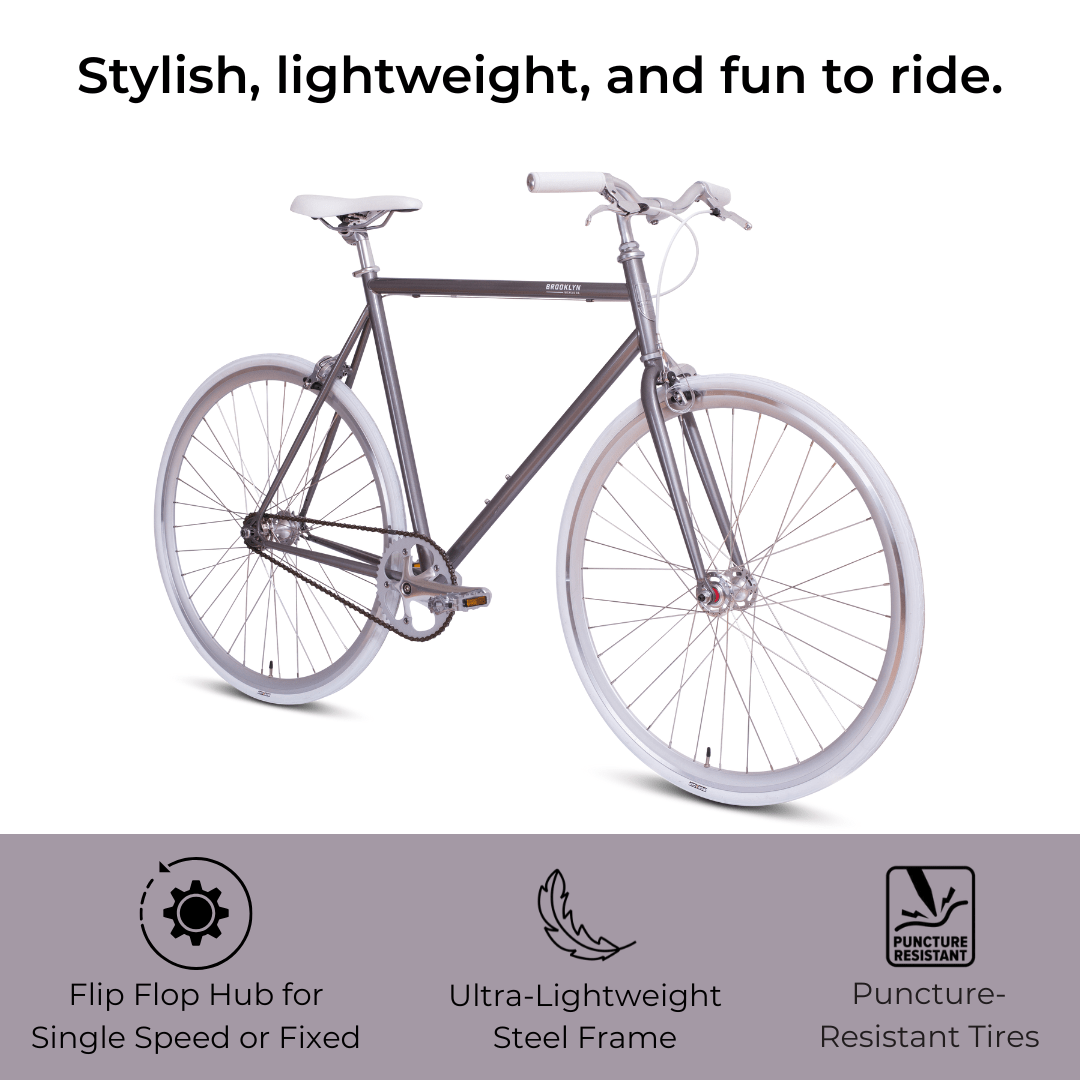
The Wythe
Diamond frame · Single speed · Fixie-capable · Simplest setup
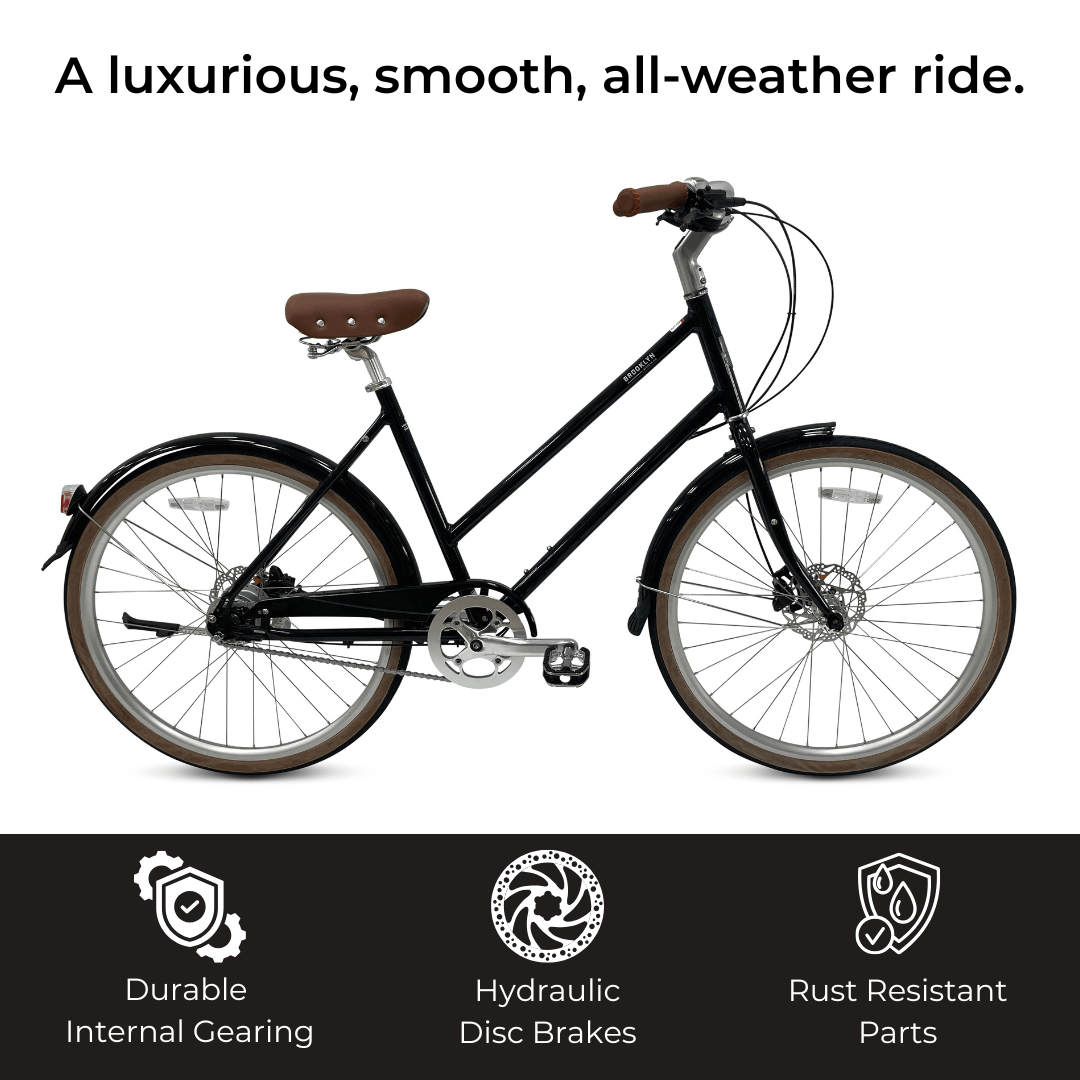

Not sure which is right for you?
Take the Bike Finder quiz or talk to us directly.

Free · 26 pages of tips
From the brand with 1,400+ five-star reviews. No spam, unsubscribe anytime.
Shop Best Sellers
View All



We build bikes for vivid lives—for taking adventures, reconnecting with old friends, discovering new neighborhoods and exploring hidden gems. Inspired by the streets of Brooklyn, our bikes are built for style, comfort, and durability. Made with top quality parts, crafted with care, and sold at an affordable price, your bike is yours for life. We scrutinize every component for maximum sustainability and performance, and every millimeter of the frame for ultimate comfort and style. We take pride in our process, in our products, and in the people who sell them.