Bicycle Gearing Options: What You Actually Need (And What You Don’t)
Resource Center / Buying Guide
How Many Gears Do You Actually Need on a Bike?
If you’ve ever walked into a bike shop and heard someone say, “This one has 27 gears!” like it’s a sports car with turbo boost, you might assume that more gears automatically mean a better ride. Here's what they won't tell you: the number of gears matters far less than you think.

What actually matters is gearing range — the span between your easiest gear and your hardest — and matching that range to how and where you ride. This guide cuts through the noise and gives you a practical framework for understanding bicycle gearing, so you can choose the right setup for your riding, not someone else's.
Gears vs. Gearing Range: The Real Distinction
The number of gears is just a count. Gearing range is what that count actually delivers — the span between your easiest gear (for climbing) and your hardest gear (for speed on flat ground).
A bike with 8 speeds and a well-chosen cassette can offer more useful range than a 21-speed bike with poorly matched chainrings and cogs. More gears doesn't automatically mean more versatility. It means more options — but those options are only valuable if the range is right for your riding.
What you want is a low enough gear to get up your steepest hill without standing and grinding, and a high enough gear to cruise comfortably on flat ground without spinning out. Everything in between is refinement.
The Three Gearing Systems
There are three main ways bicycle gearing gets set up — each with a different philosophy and a different rider in mind.
Drivetrain Type 01
Simple by Design

A single-speed bike has one gear and no shifting mechanism. What you see is what you get. That sounds limiting — and for hilly terrain it is — but for flat city riding, a single-speed is genuinely the right tool. There's nothing to maintain, nothing to adjust, nothing to go wrong. You pedal, it moves. It's the most direct relationship between rider and bike that exists.
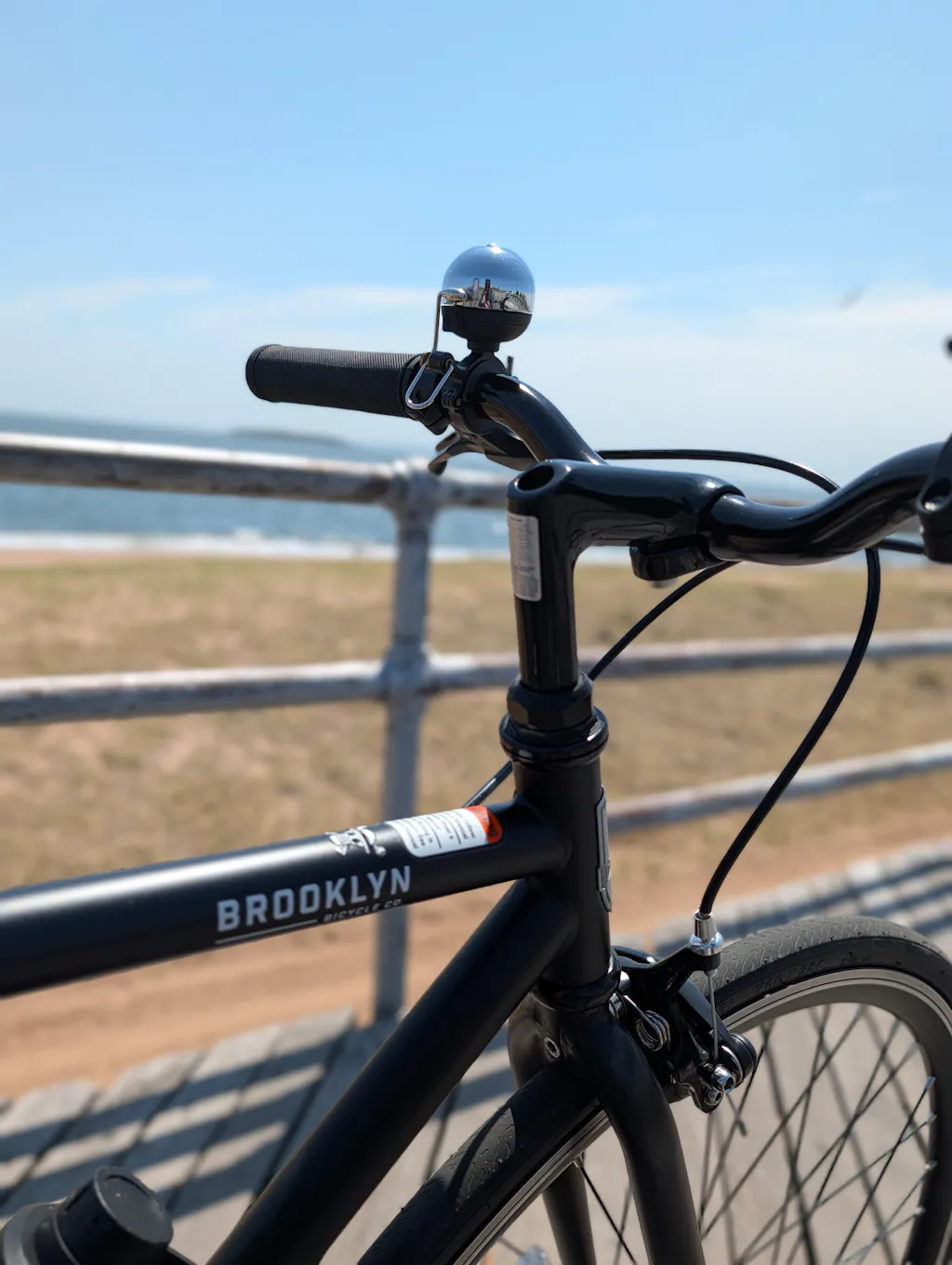
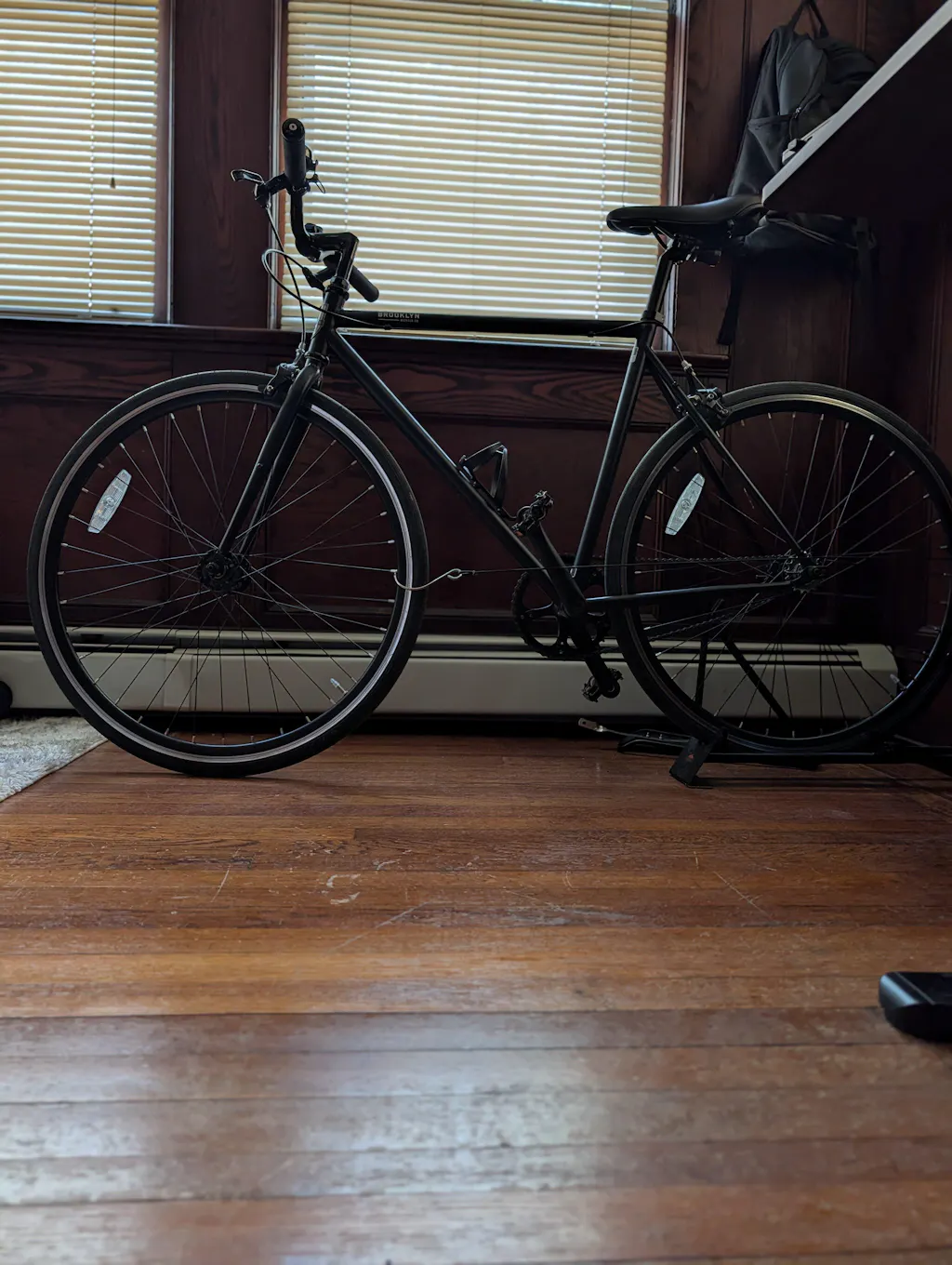
The Wythe is Brooklyn Bicycle Co.'s single-speed and fixed-gear option — featuring a flip-flop hub that allows you to coast or ride fixed, and built for city streets where simplicity is a feature, not a compromise.
Flat urban riding, short commutes, riders who want zero drivetrain maintenance.
Drivetrain Type 02
The Low-Maintenance Choice

Internal hub gears are housed entirely inside the rear wheel hub — sealed away from road grit, moisture, and debris. You shift, but the mechanism is invisible and largely self-contained. The practical advantages are real: you can shift while stopped (useful in city traffic), the drivetrain stays cleaner longer, and maintenance intervals are longer than external setups. Explore Brooklyn Bicycle Co.'s internally geared bicycles.
City commuters, flat-to-moderate terrain, riders who want minimal maintenance.
Drivetrain Type 03
The Versatile Standard

A derailleur system moves the chain across a cassette of sprockets at the rear wheel. It's the most common gearing system on the market, and for good reason: it offers the widest range and the most flexibility.
Modern derailleur setups have moved increasingly toward 1x configurations — a single front chainring paired with a wide-range rear cassette. This eliminates the front derailleur entirely, simplifying the system without sacrificing meaningful range for most riders. For urban and recreational riding, a 1x setup is almost always preferable to a 3x or 2x setup with a front derailleur: fewer components, cleaner operation, and less to adjust. Explore Bicycle Co.'s bicycles with derailleurs.
Varied terrain, longer distances, riders who want maximum range and flexibility.
How to Choose the Right Gearing for You
The right gearing setup comes down to three variables. Answer these honestly and the right drivetrain becomes obvious.
Variable 01
Terrain
Flat city streets? A single-speed or internal hub covers you. Rolling hills? A 3-speed internally geared hub fits the bill. Serious elevation? 1x derailleur with a wide cassette.
Variable 02
Maintenance Tolerance
Never want to think about your drivetrain? Single-speed or internal hub. Fine with occasional cable swaps and derailleur adjustments? External gearing is no problem.
Variable 03
Riding Style
Short, predictable daily commutes reward simplicity. Longer, exploratory rides reward range. Know which one describes you — and gear accordingly.
For most city and recreational riders, an 8 or 9-speed derailleur setup with a 1x configuration hits the best balance of simplicity, range, and low maintenance. It's what most experienced riders settle on when they stop chasing gear count and start thinking about what actually works.
Frequently Asked Questions
How many gears do I actually need for city riding?
For flat to moderately hilly urban riding, anywhere from 1 to 8 gears covers the vast majority of riders. A single-speed works well on genuinely flat terrain. An 8-speed internal hub or a 1x derailleur setup handles most city conditions comfortably. You don't need 21 speeds to commute.
What's the difference between a 1x and 3x drivetrain?
A 1x (pronounced "one-by") system has a single front chainring and uses a wide-range rear cassette to cover the full gear range. A 3x system has three front chainrings and a front derailleur to shift between them. The 1x setup is simpler, cleaner, and easier to maintain — and for most riders, covers the same practical range without the added complexity.
Is a single-speed bike good for hills?
Not really. Single-speed bikes are best suited to flat terrain. On significant hills, you're either grinding a gear that's too hard or spinning one that's too easy with no way to adjust. If your route has meaningful elevation, a geared bike is the right choice.
What's the difference between internal hub and derailleur gearing?
Internal hub gears are sealed inside the rear wheel hub — cleaner, lower maintenance, and shiftable while stopped, but with a narrower gear range. Derailleur gears are external — they offer a wider range and more flexibility, but require more regular maintenance and adjustment. For city riding, both work well. For hillier or longer rides, derailleur gearing gives you more to work with.
Does a higher gear count mean a better bike?
No. A higher gear count means more options — but those options are only useful if the gearing range matches your riding. A well-spec'd 8-speed bike with the right cassette will outperform a poorly spec'd 21-speed for most real-world riding. Focus on range, not count.
What does "gearing range" mean?
Gearing range is the span between your easiest gear (lowest ratio, for climbing) and your hardest gear (highest ratio, for speed). A wide range gives you more versatility across different terrain. A narrow range is simpler and works well when your riding conditions are consistent. Range is determined by the combination of chainring size and cassette spread — not just the number of gears.
Can I upgrade my bike's gearing later?
In many cases, yes. A derailleur-equipped bike can often be upgraded to a wider cassette or a different chainring for more range. Internal hub bikes are harder to modify. If you think your gearing needs might change, starting with a derailleur-equipped bike gives you more room to evolve.
For more buying guides and resources, visit the Brooklyn Bicycle Co. Resource Center.
Not sure which bike is right for you? Answer four quick questions and we'll find your match.
Find Your BikeShop Commuter Bikes
View All



We build bikes for vivid lives—for taking adventures, reconnecting with old friends, discovering new neighborhoods and exploring hidden gems. Inspired by the streets of Brooklyn, our bikes are built for style, comfort, and durability. Made with top quality parts, crafted with care, and sold at an affordable price, your bike is yours for life. We scrutinize every component for maximum sustainability and performance, and every millimeter of the frame for ultimate comfort and style. We take pride in our process, in our products, and in the people who sell them.